Who Was Joshua Bin Nun? Military History
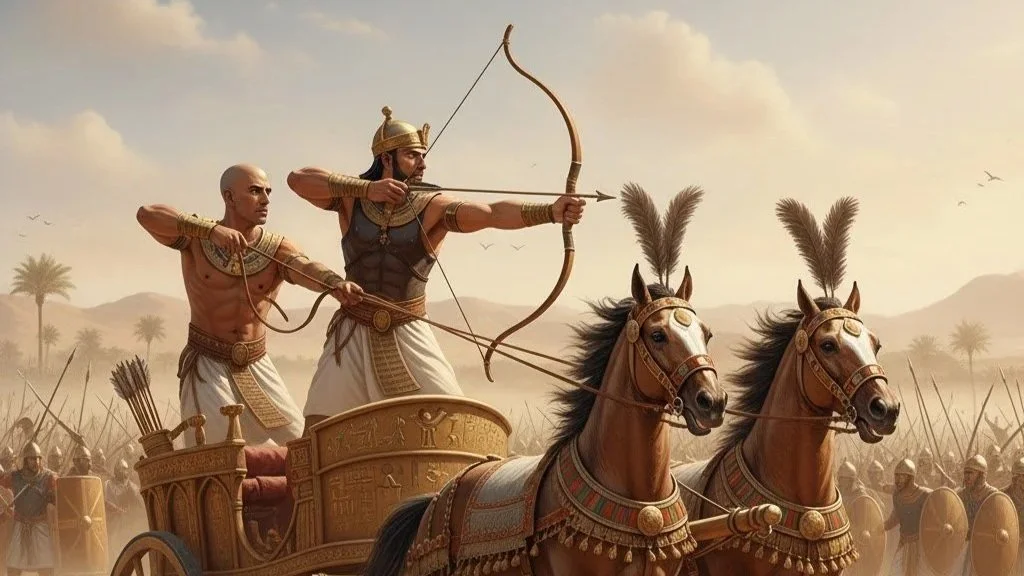
The transition of leadership from Moses to Joshua bin Nun marks one of the most critical geopolitical shifts detailed in Ancient Near Eastern texts. In the late second millennium BCE—a period corresponding to the Late Bronze Age Collapse—the Levant was characterized by a fragmentation of Canaanite city-states operating under weakening Egyptian hegemony.
Joshua emerges in the biblical text not merely as a spiritual successor, but as a brilliant military strategist, an elite reconnaissance officer, and a bureaucratic administrator responsible for the tribal allocation of land. From a historical and literary perspective, his leadership transformed a nomadic population into a sedentary, territorial confederation, fundamentally altering the demographic and political landscape of the southern Levant.
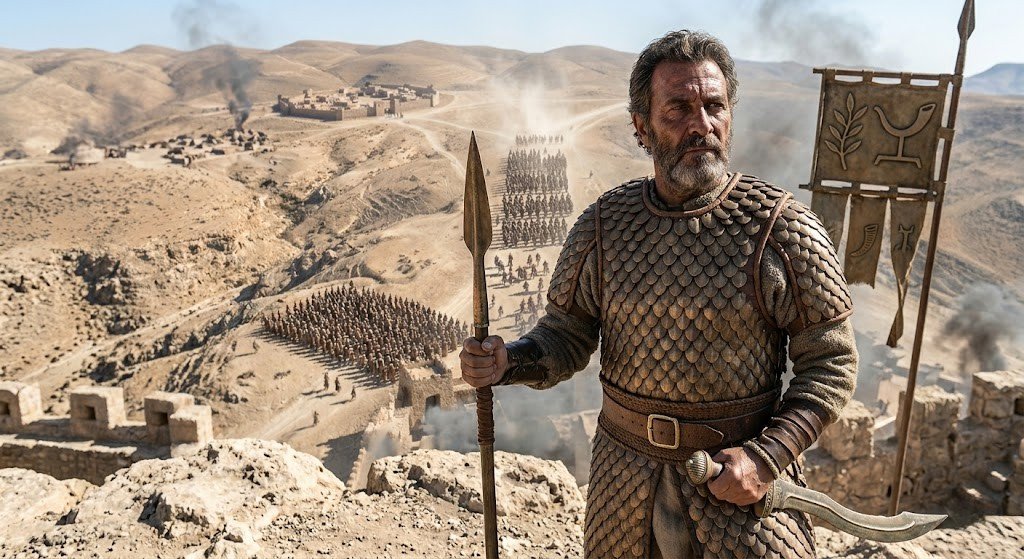
According to the biblical narrative in Exodus and Numbers, Joshua was originally named Hoshea, the son of Nun, hailing from the northern tribe of Ephraim. His lineage placed him within the aristocratic leadership of the Josephite tribes. Renamed Yehoshua (meaning "YHWH is salvation") by Moses, his early career was defined by elite military service and close proximity to institutional power.
He first appears in the historical text during the Battle of Rephidim against the Amalekites (Exodus 17:9), where Moses entrusts him with the frontline tactical command. This early reliance underscores his position as the primary enforcement arm of the nascent Israelite administration.
“And Moses said unto Joshua: ‘Choose us out men, and go out, fight with Amalek; tomorrow I will stand on the top of the hill with the rod of God in my hand.’” (Exodus 17:9)”
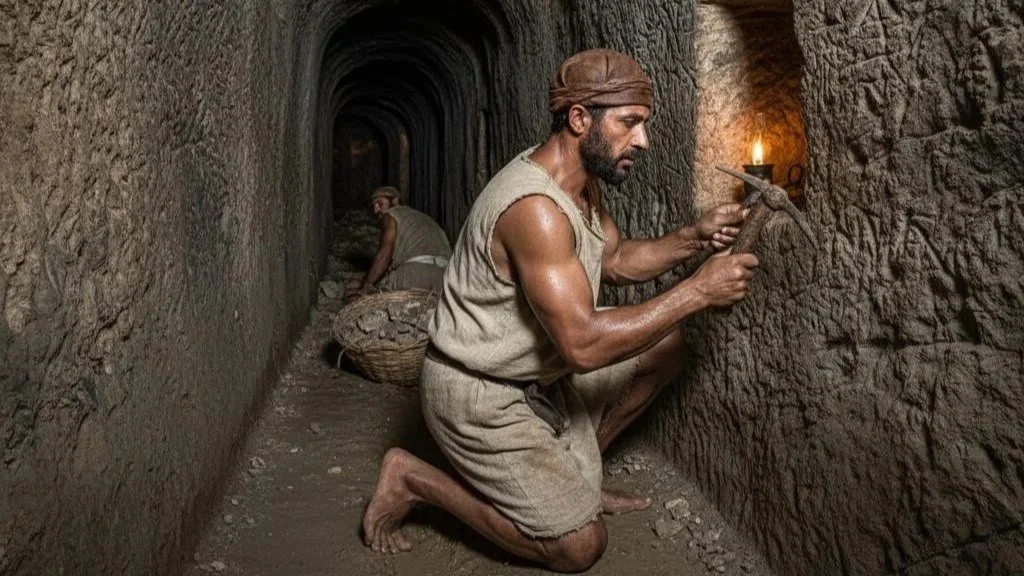
Beyond his tactical role, Joshua served as Moses's msharet (minister or chief of staff), accompanied him to the summit of Mount Sinai, and guarded the Tent of Meeting (Exodus 33:11). This dual training in military leadership and administrative governance prepared him uniquely for the conquest of Canaan.
His strategic capabilities were further solidified when he was selected as one of the twelve intelligence officers sent to scout the land of Canaan (Numbers 13). Alongside Caleb, son of Jephunneh, Joshua provided the minority tactical report that favored immediate military intervention, demonstrating an early understanding of the geopolitical vulnerability of the Canaanite city-states.
The Ambush at Ai
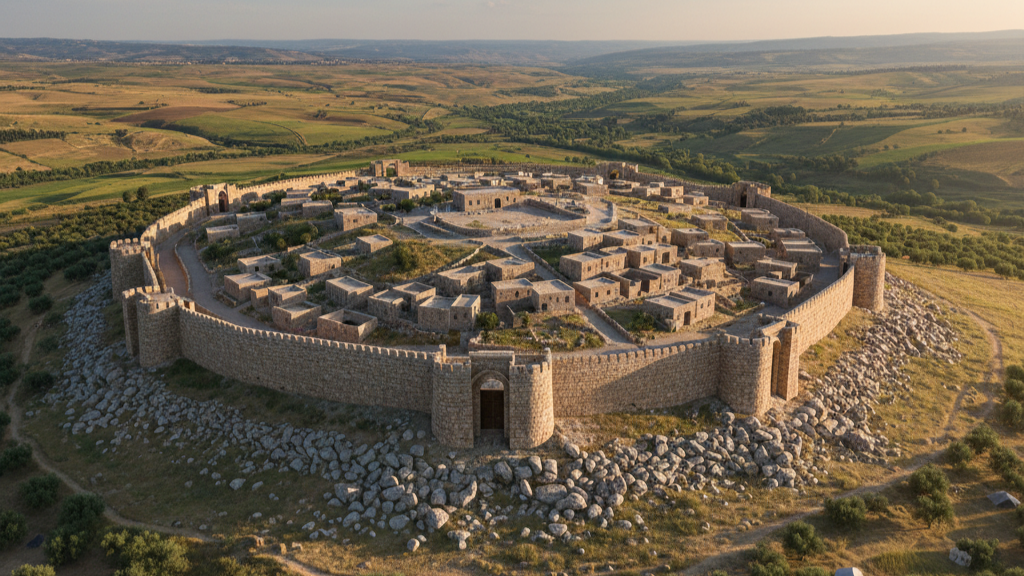
Of all the military campaigns attributed to Joshua bin Nun, the second battle for the strategic Canaanite stronghold of Ai stands as the most textually detailed and tactically sophisticated example of Late Bronze Age asymmetric warfare.
Following an initial intelligence and logistical failure that resulted in an Israelite rout, Joshua systematically re-engineered his command strategy by exploiting the enemy's psychological complacency. The engagement, localized by modern researchers at the prominent archaeological site of el-Tell, pitted a light-infantry Israelite force against the combined defensive garrisons of Ai and neighboring Bethel. Joshua’s tactical blueprint relied heavily on terrain masking, a feigned retreat (simulatio), and the deployment of a dual-layered ambush force—doctrines that predate classical military stratagems by centuries.
Tactical Sandbox: The Ambush at Ai
Late Bronze Age Asymmetric Warfare — Topographic Terrain Vector Analysis
(Terrain Masking Zone)
(To Wilderness)
Fortress Tell
Phase 1: Night Operations & Intelligence Cover
Under complete cover of darkness, Joshua organizes his forces into two distinct tactical divisions. Operational execution relies entirely on keeping the main deployment patterns invisible to lookouts sitting on the defensive walls of Ai.
The operational execution began under the cover of darkness. Joshua deployed a strike force of 5,000 elite troops to conceal themselves in the deep, rugged ravines west of Ai, positioned precisely between Ai and Bethel to cut off any potential northern reinforcement lines. Simultaneously, Joshua led the main body of his army openly down into the valley north of the city, deliberately exposing his vanguard to the lookouts on the city walls.
“And Joshua rose up early in the morning, and numbered the people, and went up, he and the elders of Israel, before the people to Ai... and pitched on the north side of Ai; now there was a valley between him and Ai. ”
At dawn, Joshua executed the critical phase of the operation: a calculated, mock frontal assault. Recognizing the psychological edge gained from their previous victory, the King of Ai immediately committed his entire garrison to a counter-offensive, emptying the fortified city of its defenders.
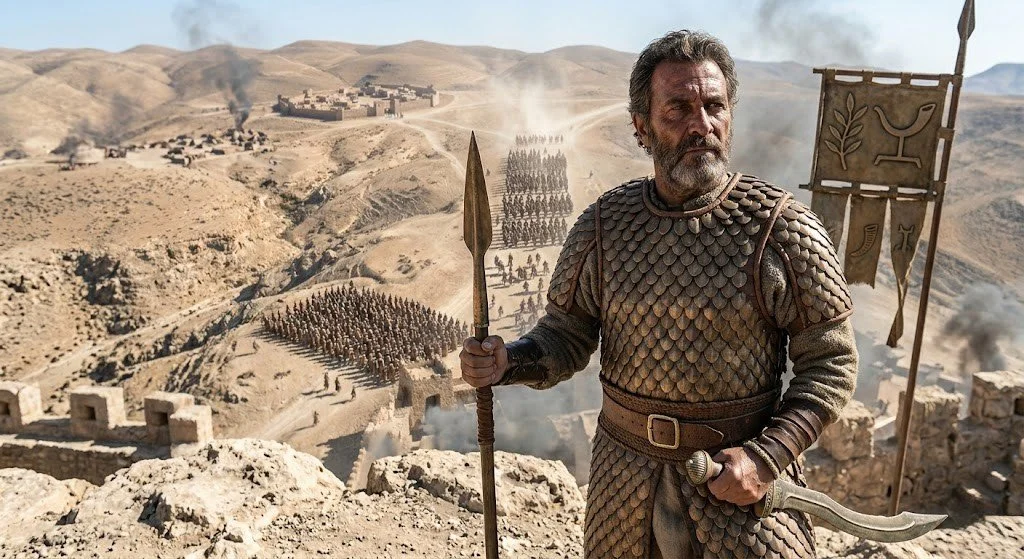
Joshua’s forces simulated panic, retreating down the valley toward the wilderness. Once the Canaanite forces were drawn completely away from their fortifications and their lines of communication were severed, Joshua raised his bronze javelin toward the city—the pre-arranged signal for the hidden western force to emerge, seize the undefended gates, and apply torch metrics to the administrative center.
Caught in a lethal pincer movement between the advancing ambush force and Joshua’s rallying main body, the Canaanite coalition was completely neutralized in the open terrain, securing Israelite dominance over the central highlands.
The Conquest of Canaan and Strategic Milestones
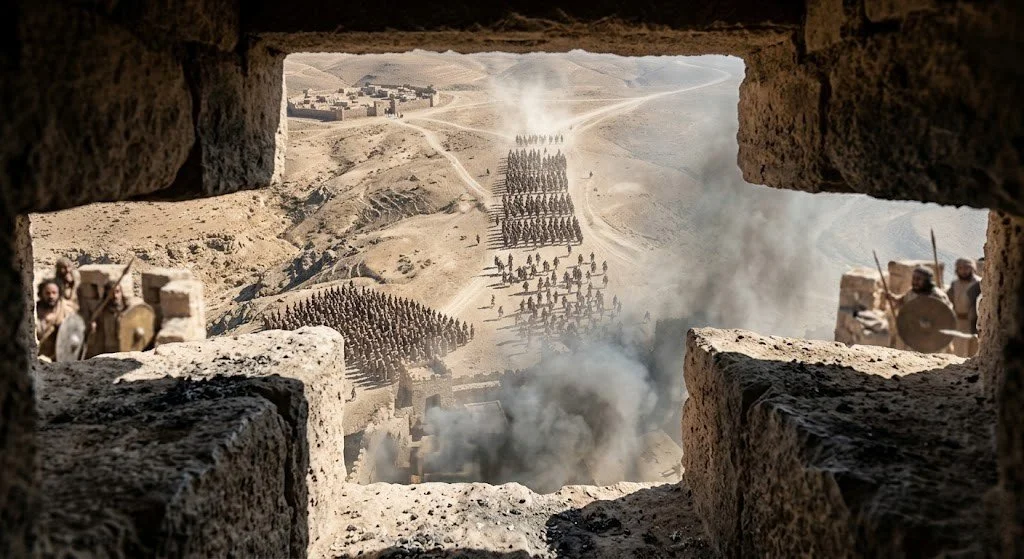
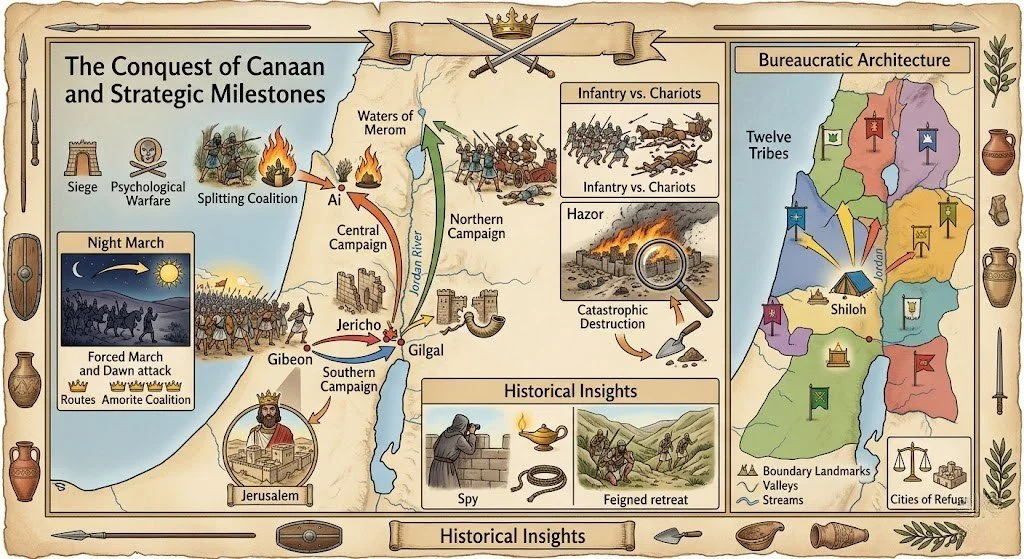
The military campaigns led by Joshua are characterized by a highly calculated three-pronged strategic movement: central, southern, and northern campaigns. Upon crossing the Jordan River—an event associated with the site of Gilgal—Joshua established a fortified base of operations.
The central campaign aimed to split the Canaanite coalition in half. The siege of Jericho, described archaeologically by late Bronze-to-Iron Age transitions, and the subsequent psychological warfare applied at Ai, effectively fractured local resistance. By cutting the communication and supply lines between the northern and southern city-states, Joshua prevented a unified Canaanite response.
The southern campaign was triggered by the Gibeonite deception and the subsequent siege of Gibeon by a coalition of five Amorite kings led by Adoni-zedek of Jerusalem. Joshua’s counter-strategy relied on a rapid, overnight forced march from Gilgal to Gibeon, launching a surprise dawn attack that routed the coalition forces.
This campaign effectively brought the Judaean hill country and the Shephelah under Israelite hegemony. The northern campaign culminated in the Battle of the Waters of Merom, where Joshua faced a massive coalition led by Jabin, King of Hazor. Utilizing swift infantry maneuvers against a chariot-heavy force, Joshua neutralized the technological advantage of the Canaanites, leading to the destruction of Hazor, a city confirmed by archaeologists like Yigael Yadin to have suffered a catastrophic fiery destruction in the late 13th century BCE.
The Tactical Mechanics of Late Bronze Age Warfare and Intelligence Gathering
The military campaigns of Joshua present a sophisticated understanding of asymmetrical warfare, espionage, and psychological operations that aligned with Late Bronze Age military doctrines. Rather than relying solely on brute force, Joshua systematically utilized reconnaissance assets prior to every engagement.
The deployment of spies into Jericho to assess civilian morale and identify structural vulnerabilities via Rahab’s domicile built into the city wall (Joshua 2) demonstrates advanced urban espionage. Furthermore, the ambush tactics deployed at the second Battle of Ai (Joshua 8) reveal a masterful use of terrain, feigned retreats, and psychological manipulation to draw out a garrisoned force from its fortifications.
This precise use of topography allowed a technologically disadvantaged infantry force to repeatedly defeat superior, chariot-reliant Canaanite armies by engaging them in narrow passes and rugged hill country where chariots were tactically useless.
The Bureaucratic Architecture of the Tribal Allotment
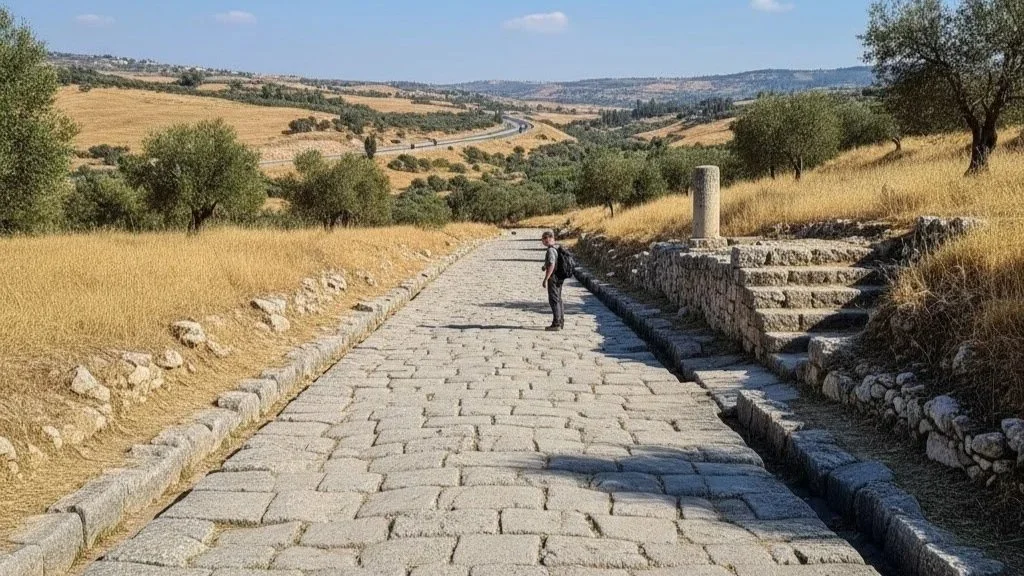
The latter half of the Book of Joshua transitions from a military chronicle to a highly detailed administrative and bureaucratic document, mapping out the precise territorial boundaries of the Twelve Tribes of Israel. Historically, this section functions similarly to ancient boundary stones (kudurru) or Egyptian administrative topographies, outlining borders using specific natural landmarks, valleys, streams, and specific urban centers.
Joshua, acting alongside Eleazar the priest, established the administrative capital at Shiloh, where the Tabernacle was erected (Joshua 18:1). This move centralizes the geopolitical and religious identity of the tribes. The allocation text includes the designated "Cities of Refuge" (arei miklat) and Levitical cities, which served as a constitutional framework ensuring legal protections and administrative uniformity across a highly fractured geographic region, transforming a loose coalition of tribes into a structured commonwealth.
5 Surprising Historical Facts About Joshua bin Nun
He was a Trained Special Operations Officer Before Leading the Nation Decades before assuming total command, Joshua spent 40 days conducting deep reconnaissance inside heavily fortified Canaanite territory. His survival and subsequent strategic report demonstrate high-level training in intelligence gathering, logistical mapping, and psychological assessment of enemy forces under hostile conditions.
Joshua Employed Advanced Night-March Tactics to Achieve Strategic Surprise In the campaign to relieve the besieged city of Gibeon, Joshua executed an unprecedented all-night, uphill forced march from Gilgal, covering roughly 30 kilometers of rugged terrain. This logistical feat allowed his infantry to catch the Amorite coalition completely off guard at dawn, rendering their superior chariot divisions ineffective.
He Initiated One of the Earliest Documented Treaties via Deception Joshua was outmaneuvered diplomatically by the Gibeonites, who used worn-out sacks, torn wineskins, and moldy bread to pose as distant travelers. Despite discovering the ruse later, Joshua adhered strictly to the international legal protocols of the Ancient Near East, honoring the covenant and integrating them into the Israelite administrative ecosystem.
His Military Directives Explicitly Targeted Royal Command Structures Throughout his campaigns, Joshua systematically targeted the ruling elites of the Canaanite city-states rather than focusing solely on civilian casualties. The biblical text records the capture, public execution, and targeted humiliation of 31 localized kings, a deliberate psychological strategy designed to collapse the feudal hierarchy of Canaan.
He Lived and Was Buried in a Territory He Received as a Personal Gift Uniquely among ancient near eastern conquerors who claimed imperial capitals, Joshua requested only a modest, uncultivated hill town for himself: Timnat-serah in the rugged hill country of Ephraim. He rebuilt the town from scratch, lived out his final days there, and was buried within his own private inheritance.
Actionable Heritage Suggestions: Exploring the History of Joshua
Tel Hazor National Park
Historical Connection: Hazor was the head of the northern Canaanite coalition defeated by Joshua in the Battle of the Waters of Merom.
What to See: Visit the Upper City to view the monumental Canaanite palace. Look specifically for the thick ash layer and heavily burnt stones, which provide physical evidence of the massive 13th-century BCE destruction layer matching the biblical account of Hazor's burning (Joshua 11:11).
Practical Tip: The best time for high-contrast photography of the archaeological strata and the deep destruction ash is mid-morning, before the intense midday Mediterranean sun washes out the coloration of the earth layers.
Tel Shiloh (Ancient Shiloh)
Historical Connection: Following the primary conquests, Joshua established Shiloh as the first religious and administrative capital of Israel, where the Tabernacle stood for 369 years and the land allocation took place.
What to See: Explore the northern platform of the Tel, which matches the dimensions of the biblical Tabernacle, and view the Hellenistic and Byzantine structures built to commemorate the site's ancient sanctity.
Practical Tip: Visit the multi-media museum on-site to view late Bronze Age and Iron Age I pottery assemblages discovered during excavations, which illustrate the material culture of the Israelite settlement period.
Joshua's Altar Archaeological Site (Mount Ebal)
Historical Connection: According to Joshua 8:30, after the victories at Jericho and Ai, Joshua built an altar of unhewn stones on Mount Ebal, fulfilling the command of Moses to hold a covenant renewal ceremony.
What to See: The site features a large, rectangular footprint of a cultic structure constructed of unhewn stones, excavated by archaeologist Adam Zertal, who dated the complex to the Iron Age I (ca. 1200 BCE).
Practical Tip: Due to its sensitive geographical and geopolitical location in the Samarian highlands, access to the Mount Ebal site requires coordination with regional authorities or organized historical tour groups. Ensure travel clearance well in advance.
The Israel Museum (Jerusalem) - Archaeology Wing
Historical Connection: The museum houses the primary institutional collection of Late Bronze Age and Iron Age I artifacts excavated across the southern Levant.
What to See: Visit the Canaanite and Biblical Archaeology galleries to examine authentic Canaanite idols, Egyptian scarabs from the Amarna period, early Israelite storage jars (collared-rim jars), and weapons typical of the Late Bronze/Early Iron Age transition.
Practical Tip: Allocate at least two hours exclusively for the Bronze and Iron Age galleries. Photography is permitted without flash; utilize a prime lens with a wide aperture to capture clear images of the artifacts behind low-reflection glass.
No ads, no commercials, just high-quality content.
If you find our work valuable, we would be grateful for your support. Your contribution helps us continue our mission of providing high-quality content and sharing it with an even wider audience. Support Our Mission