How Soviet Immigration Transformed Modern Israel
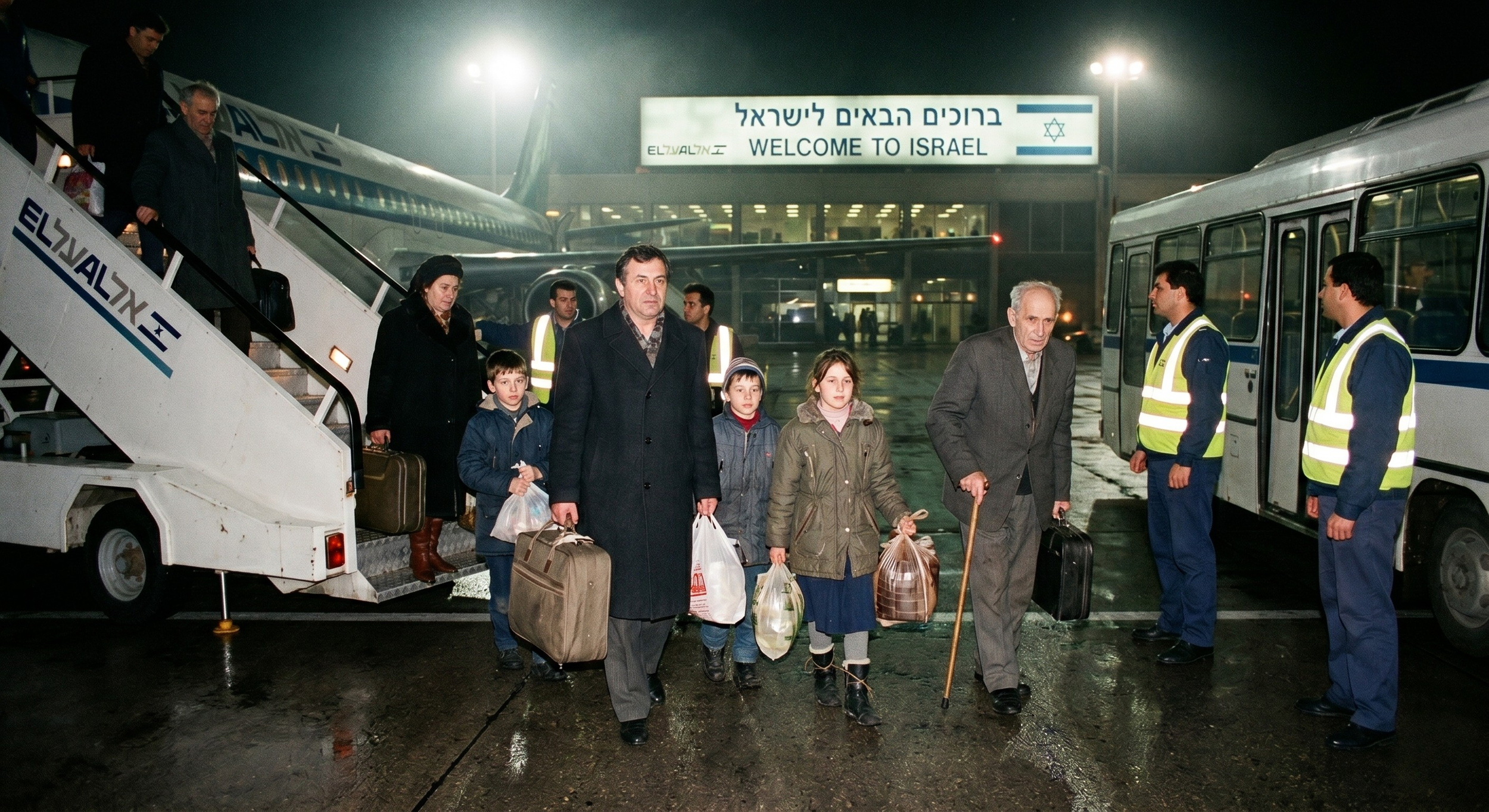
The migration of Soviet Jewry to the State of Israel during the late 20th century represents one of the most significant demographic shifts in modern Middle Eastern history. This movement, often referred to as the "Great Aliyah," was precipitated by the internal disintegration of the Soviet Union and the subsequent liberalization of emigration policies under Mikhail Gorbachev's Perestroika.
By 1989, the relaxation of the "Iron Curtain" combined with rising ethnic tensions and economic instability in the crumbling Soviet republics triggered a mass departure. While previous waves of immigration were often ideological or religious, the 1990s wave was largely driven by a search for stability and the closure of alternative destinations, such as the United States, which had narrowed its refugee status criteria for Soviet citizens.
Logistical Challenges and the Policy of Direct Absorption
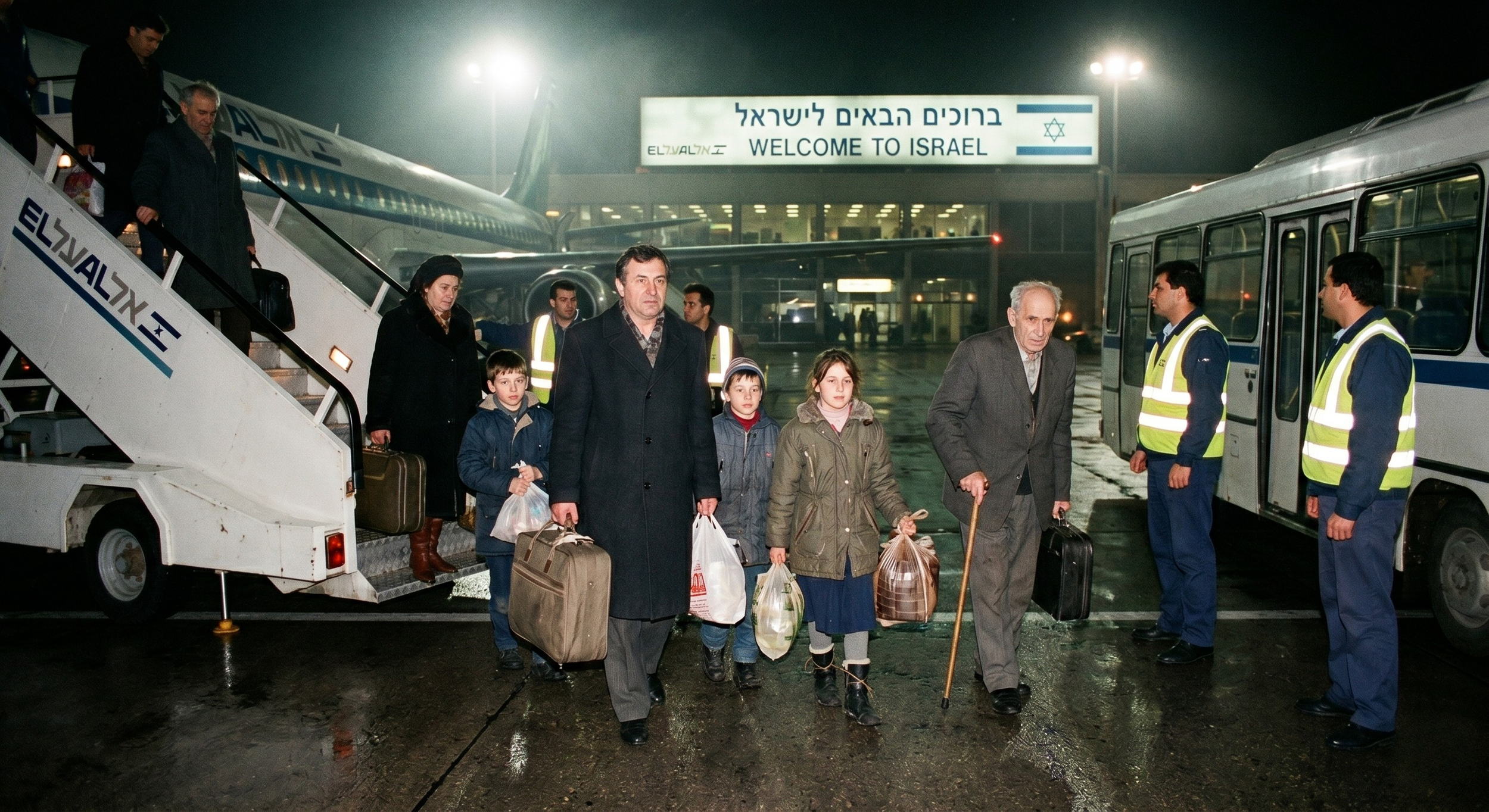
The scale of the arrival was unprecedented; between 1989 and the end of the decade, approximately 800,000 individuals arrived, increasing the Israeli population by nearly 20%. This influx necessitated a radical departure from traditional "Absorption Centers" toward a "Direct Absorption" model.
Under this policy, the Israeli government provided immigrants with a "subsidy basket" (Sal Klita), allowing them to rent housing and seek employment on the private market. This shift placed immense pressure on the national infrastructure, leading to a severe housing crisis that forced the government to establish temporary "caravan sites" (mobile home parks) across the country to accommodate the rapid arrival of tens of thousands of families per month.
Yearly Immigration from the FSU (1989–1999)
Socio-Economic Reconfiguration and Human Capital
The 1990s Aliyah was characterized by an extraordinarily high level of professional and academic achievement. Data indicates that over 55% of the immigrants held university degrees, including a disproportionate number of engineers, scientists, physicians, and educators. This massive infusion of "human capital" arrived exactly as Israel was transitioning from a labor-intensive economy to a knowledge-based high-tech sector.
The presence of world-class researchers and engineers provided the technical foundation for what would eventually be known as the "Start-Up Nation," as these professionals integrated into burgeoning R&D centers and academic institutions.
Cultural and Political Integration
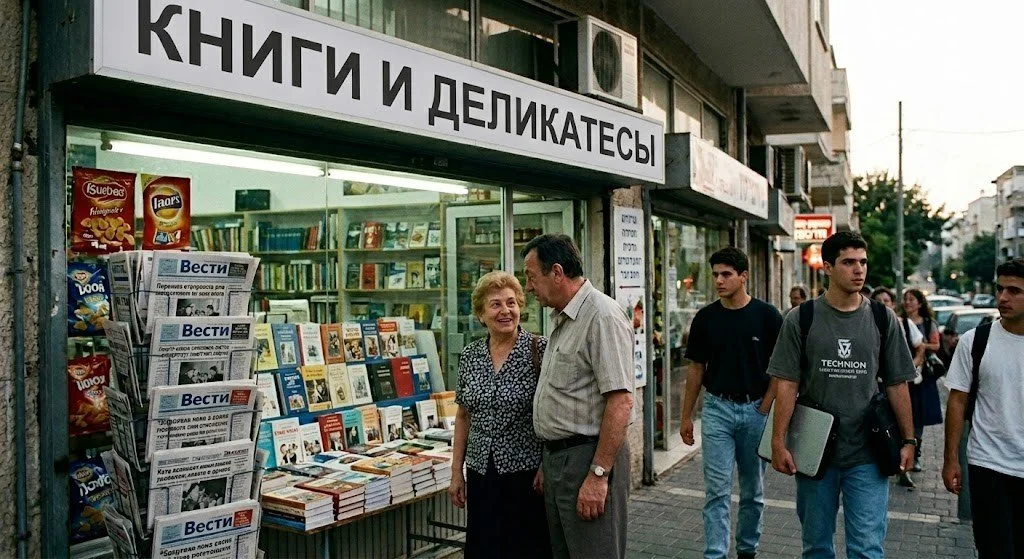
Beyond economics, the Russian-speaking community significantly altered the Israeli cultural and political landscape. The sheer size of the demographic allowed for the preservation of Russian linguistic and cultural identities, leading to the creation of a massive Russian-language media apparatus, including newspapers, television channels, and theater companies.
Politically, the FSU (Former Soviet Union) community emerged as a pivotal "swing vote," eventually forming its own political parties, such as Yisrael Ba'Aliyah. This shift challenged the traditional dominance of the Labor and Likud blocs and introduced a staunchly secular, security-oriented perspective into the national discourse.
Scientific and Educational Milestones
The academic impact of the 1990s Aliyah is perhaps most visible in the fields of mathematics and the natural sciences. The influx of Soviet-trained educators led to a rigorous restructuring of mathematics and science curricula in Israeli secondary schools and universities.
Furthermore, the establishment of "technological incubators" by the Ministry of Industry and Trade was specifically designed to utilize the specialized skills of immigrant scientists. These initiatives not only facilitated the patenting of new technologies but also ensured that Israel remained at the forefront of global scientific research during the transition into the 21st century.
Professional Breakdown: Top 5 Fields
The Reality of Hardship: The Immigrant Experience in the Early 1990s
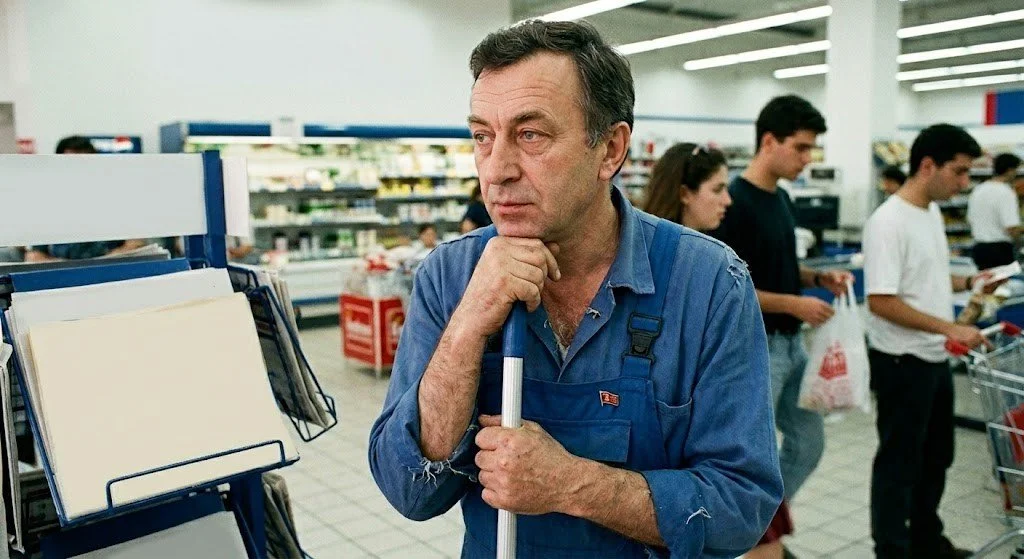
Despite the long-term success of the Aliyah, the initial years were marked by profound systemic and personal hardship for the immigrants. The phenomenon of "brain waste" became a defining feature of the early 1990s, as world-class surgeons, engineers with decades of experience, and acclaimed musicians were frequently forced into unskilled manual labor or cleaning jobs due to language barriers and bureaucratic delays in professional licensing.
Many families experienced a sharp decline in social status and economic security, living in overcrowded, substandard housing or isolated caravan parks far from urban centers. The psychological toll of migration—compounded by the loss of professional identity and the struggle to master a new language in middle age—created a generational rift, where parents sacrificed their careers to ensure the eventual integration of their children into Israeli society.
Deep-Dive Historical Insights
The Statistical Magnitude of Professional Influx
The density of professional expertise within the 1990s Aliyah was statistically unparalleled in the history of global migration. Analysis of Ministry of Absorption records shows that during this period, Israel absorbed approximately 57,000 engineers and 12,000 physicians from the Former Soviet Union. To put this in perspective, the number of engineers who arrived in one decade was double the existing number of engineers in Israel at the time.
This influx effectively reduced the patient-to-doctor ratio in Israel to one of the lowest in the world, though it initially created a surplus that the medical infrastructure struggled to employ. The sheer volume of PhD holders surpassed the capacity of Israeli universities, leading to the creation of the "Gileadi Program," which provided specialized funding to integrate these researchers into academic and industrial frameworks. Without this specific demographic contribution, the rapid expansion of the Israeli aerospace and software industries in the late 1990s would have lacked the necessary labor force.
5 Surprising Facts About the Great Aliyah
World Record for Physicians: The influx of Soviet doctors was so immense that Israel briefly held the world record for the highest number of physicians per capita, reaching approximately 1 doctor for every 200 people.
The "Caravan" Solution: To prevent homelessness during the 1990 peak, the Israeli government purchased thousands of mobile homes from abroad, creating entire "instant cities" that remained inhabited for over a decade.
Engineering Surplus: During the height of the migration, it was estimated that the number of Soviet-trained engineers arriving in Israel exceeded the total number of engineers graduated by the Technion—Israel's premier technical institute—since its founding in 1912.
Operation Exodus Funding: The absorption effort was partially funded by an unprecedented $10 billion loan guarantee from the United States government, which was the subject of intense diplomatic negotiation during the Bush administration.
A New Linguistic Bloc: Despite the "Melting Pot" ideology of early Zionism, the 1990s Aliyah was the first wave to successfully maintain its mother tongue on a mass scale, making Russian the third most spoken language in Israel.
Actionable Heritage Suggestions
ANU - Museum of the Jewish People (Tel Aviv)
We recommend visiting the "New Wing" of ANU, which features extensive digital exhibits on the 20th-century Aliyah. The museum provides a data-driven look at how Soviet Jews maintained their culture while integrating into Israeli society, including rare archival footage of the 1990s arrivals.
The National Library of Israel (Jerusalem)
The National Library houses the most comprehensive collection of Russian-language periodicals and personal archives from the Great Aliyah. For those interested in historical research, the "Ephemera Collection" includes original posters, pamphlets, and government absorption documents from 1989–1995.
The "Russian" Districts of Haifa (Hadar HaCarmel)
To observe the socio-architectural impact of the migration, a visit to the Hadar neighborhood in Haifa is essential. This area became a hub for the FSU community; we suggest exploring the local bookstores and delis, which still operate as cultural anchors for the veteran immigrant population.
Ashdod City Museum and Marina
Ashdod was one of the primary cities to absorb Soviet immigrants, with its population nearly doubling in the 1990s. The city's cultural centers often host exhibitions detailing the specific contribution of FSU artists and musicians to the city's development from a small port to a major urban center.