Who Was Flavius Josephus? Judea’s Controversial Historian
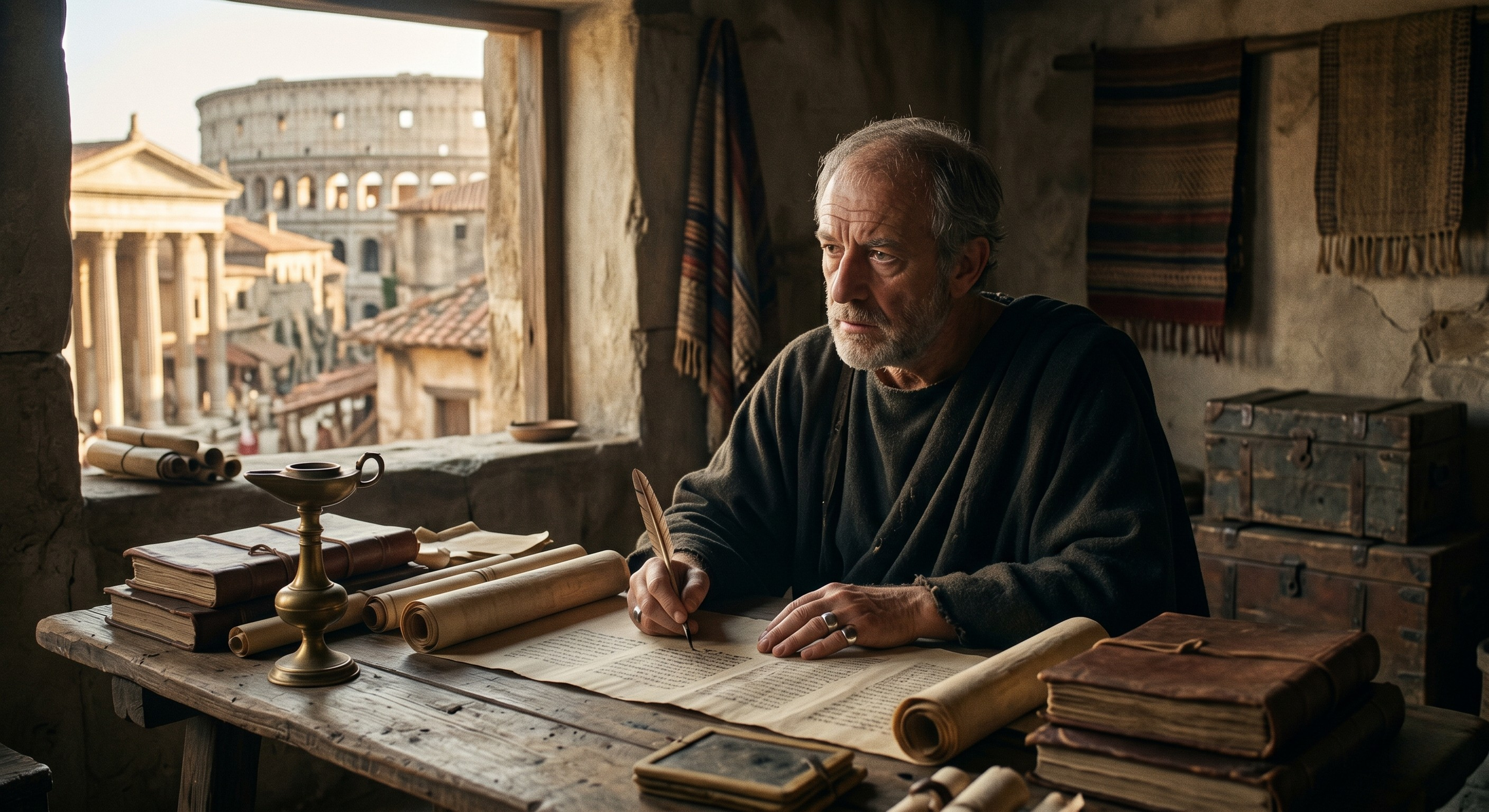
Flavius Josephus
Few figures from antiquity elicit as much intense debate, historical fascination, and political polarization as the first-century chronicler Flavius Josephus. Born Yosef ben Matityahu to a high-ranking priestly family in Jerusalem, he occupied a front-row seat to one of the most cataclysmic transformations in the ancient Mediterranean world: the Great Revolt of Judea against the Roman Empire (66 - 73 CE).
To his contemporaries and centuries of Jewish tradition, he was often branded a traitor—a general who defected to the very empire that leveled the Second Temple. Yet to modern archaeology and global historical scholarship, we recognize him as an indispensable lens. Without his dense, surviving volumes, our structural, political, and cultural understanding of ancient Judea, Roman military mechanics, and classical archaeology would be fractured beyond recognition.
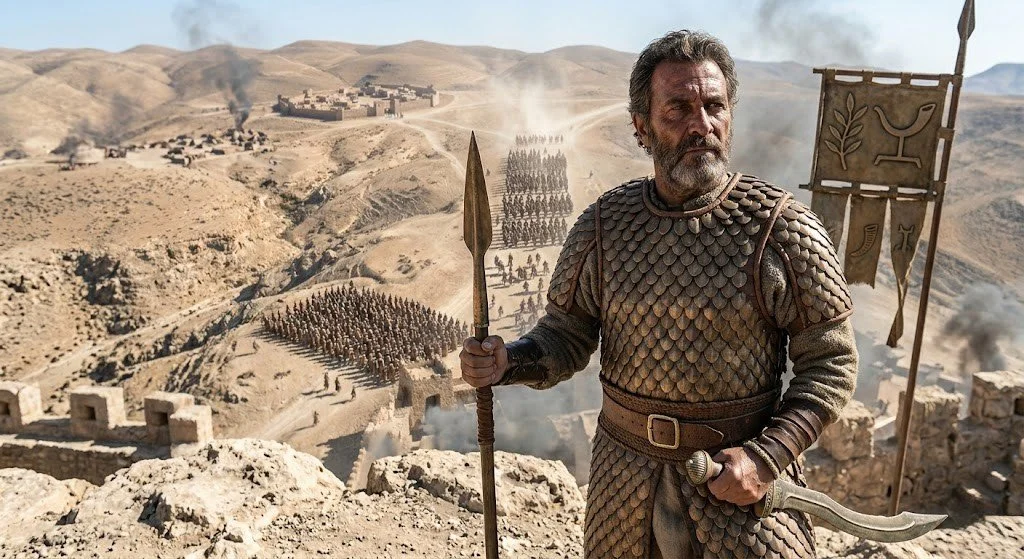
The narrative arc of Josephus reads less like a dry academic chronicle and more like an intricate geopolitical thriller. In 66 CE, as Jerusalem erupted in open rebellion, the young aristocratic priest was unexpectedly dispatched to Galilee to command Jewish forces against the impending imperial onslaught.
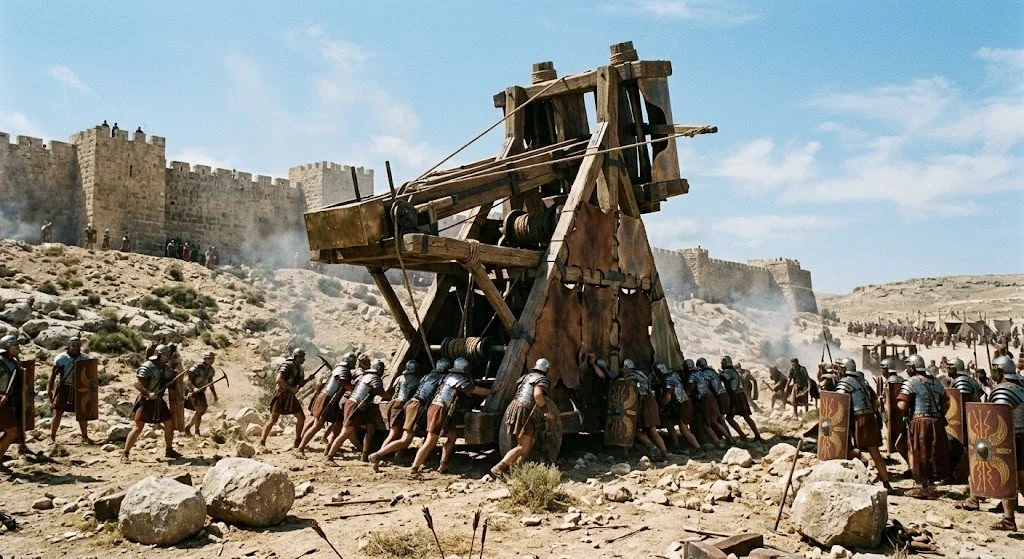
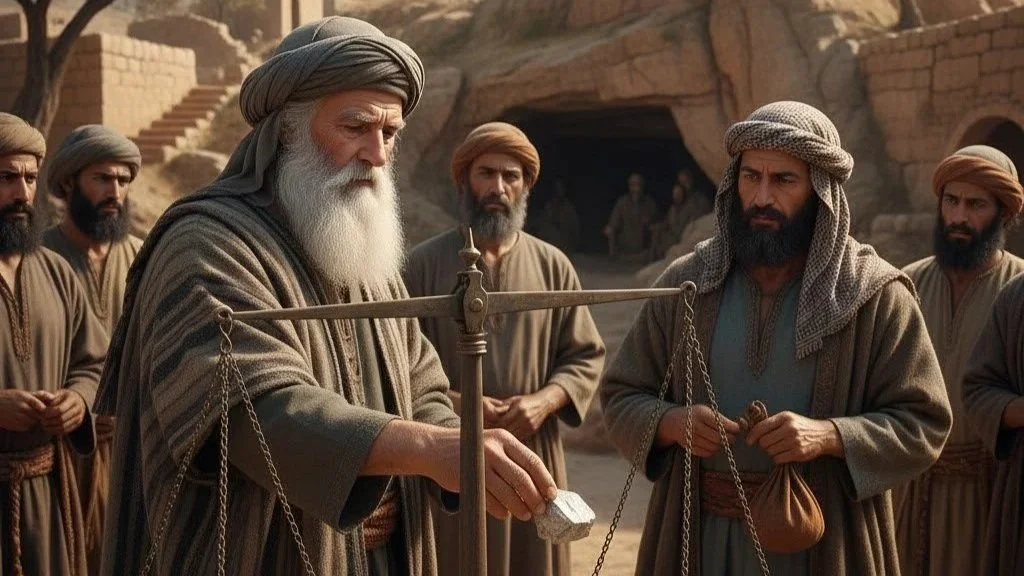
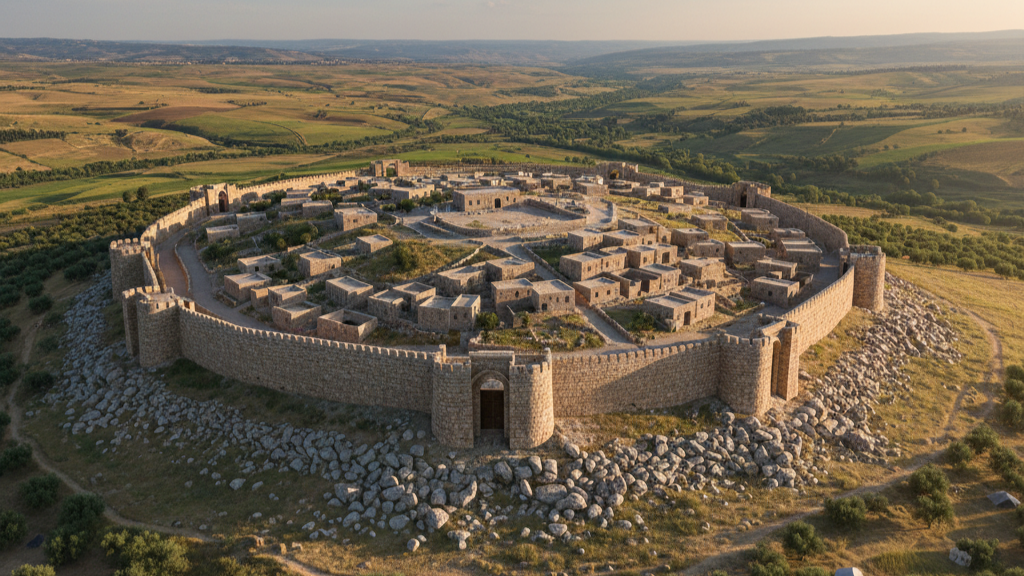
Face-to-face with the seasoned legionaries of Roman General Vespasian, Josephus orchestrated a desperate, forty-seven-day defense of the fortified hilltop town of Jotapata. When the city fell, rather than participating in a mutual suicide pact with his remaining officers inside a hidden cistern, Josephus survived. Brought before Vespasian in chains, he boldly bartered for his life by utilizing his priestly background to deliver a profound prophetic claim: he predicted that Vespasian would soon wear the imperial purple of Rome.
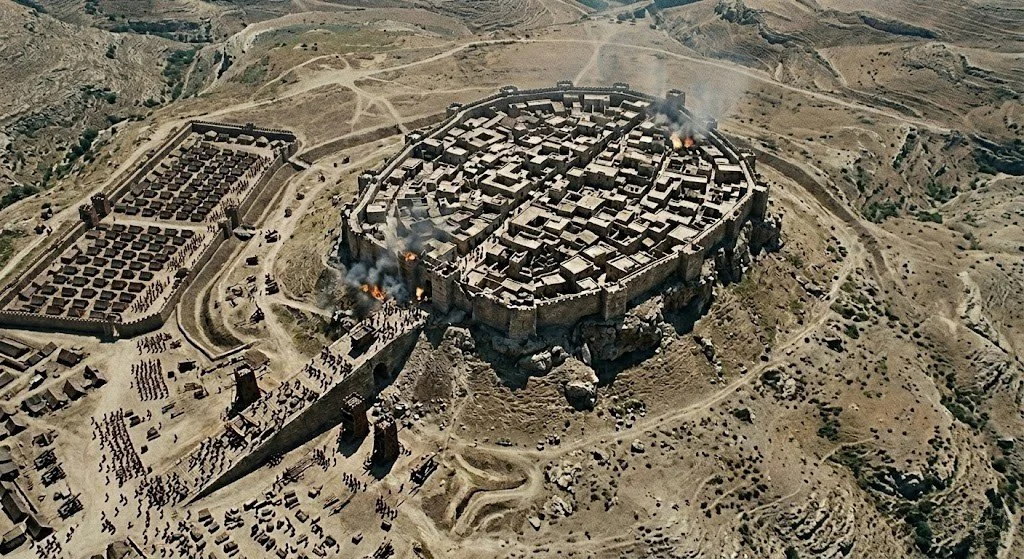
Roman siege on Jotapata
When Nero’s death triggered a chaotic civil war and Vespasian indeed ascended the throne as Emperor in 69 CE, the captive's prophecy was fulfilled, completely altering his destiny. Granted his freedom, Josephus assumed the prestigious family name of his imperial patrons—Flavius—and relocated to Rome, where he lived out his days in comfort as a pensioned citizen.
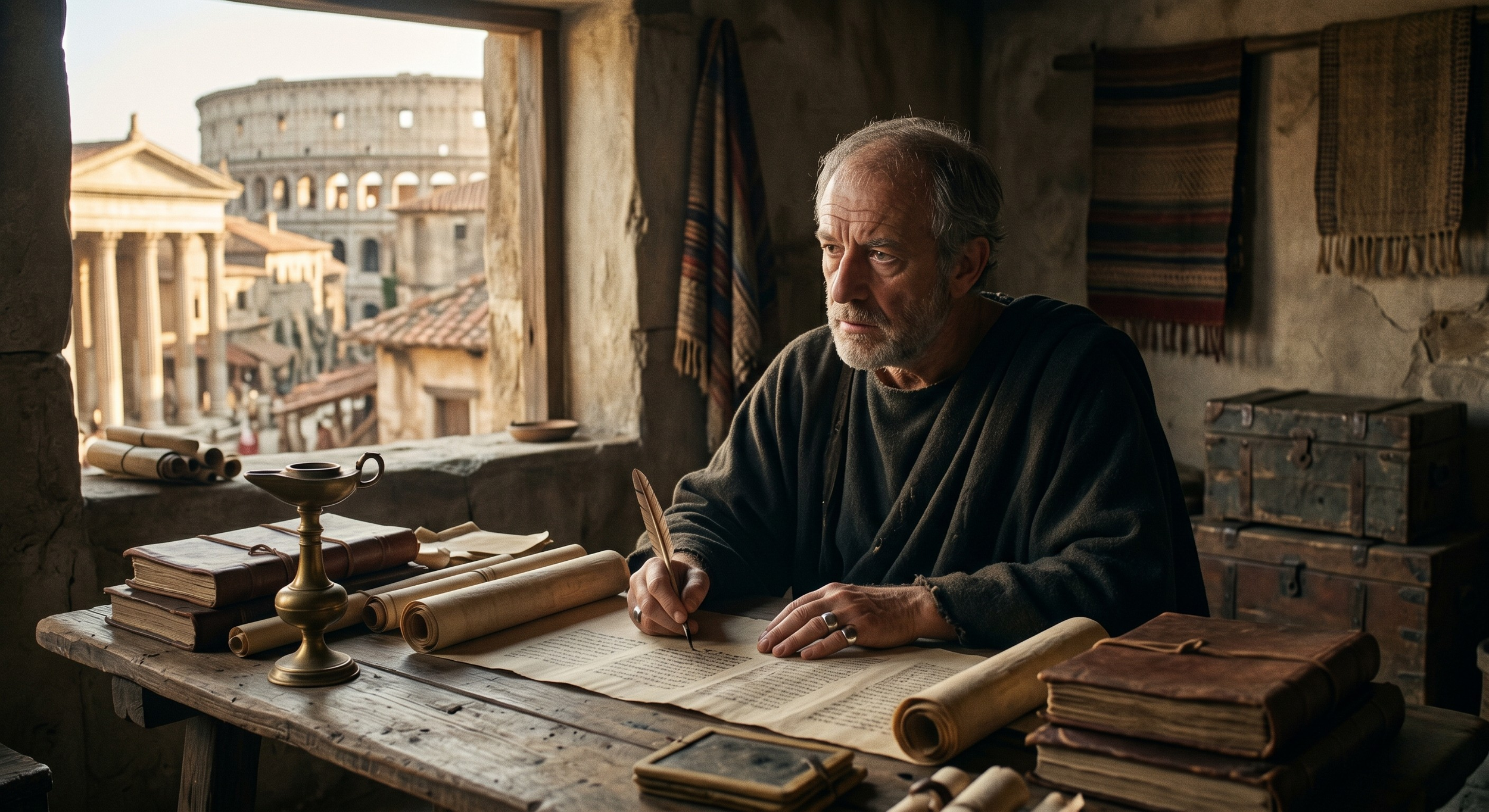
Safely ensconced in the capital, he transformed from a failed battlefield commander into an aggressive literary defender of his people. Writing in Greek under the watchful eye of the Flavian dynasty, we see him navigate an extraordinary tightrope. He sought to explain Jewish antiquity to a highly cynical Roman audience while simultaneously explaining the terrifying, inexorable military might of Rome to a devastated, conquered homeland.
Geopolitical Context and the Fall of Jerusalem
The historical output of Flavius Josephus can only be interpreted when framed against the complex geopolitical realities of first-century Roman provincial administration. Judea had long simmered with sectarian unrest, driven by heavy imperial taxation, Roman insensitivity to Temple rituals, and deep internal socio-economic divisions.
When the Roman governor Gessius Florus seized Temple funds in 66 CE, it ignited a massive, multi-factional explosion of popular rebellion. Josephus captures this internal fracturing with precise detail, categorizing the Jewish factions into Pharisees, Sadducees, Essenes, and the militant, unyielding Zealots. His writings show that the ensuing conflict was not merely a war between an empire and a province, but a bloody, devastating civil war fought within the walls of Jerusalem itself.
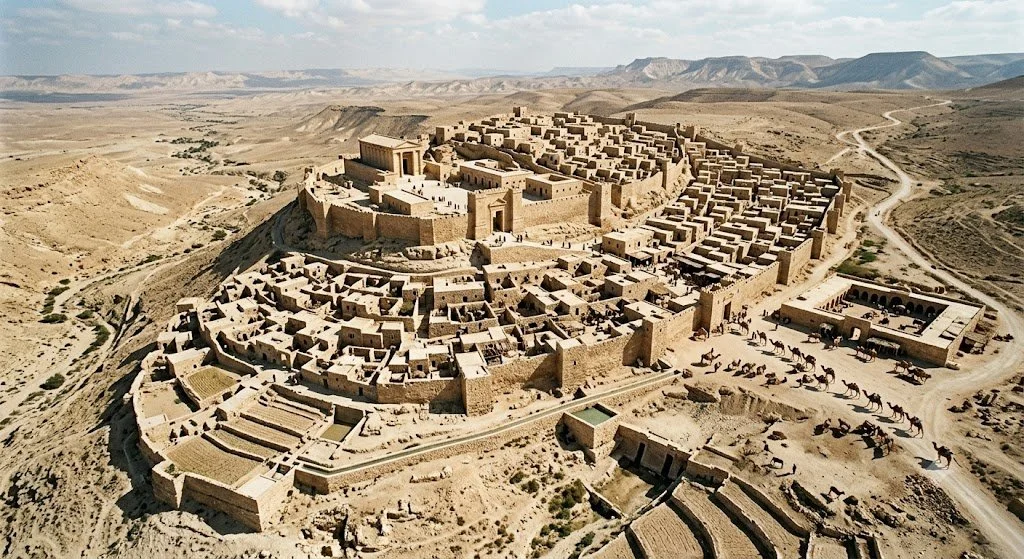
From an architectural and military standpoint, the descriptions provided by Josephus in The Jewish War and Antiquities of the Jews have served as literal roadmaps for modern excavations. His meticulous breakdowns of Jerusalem's three defensive walls, the soaring dimensions of Antonia Fortress, and the opulence of Herod the Great’s desert bastions like Masada and Herodium were once dismissed by hyper-critical scholars as hyperbole.
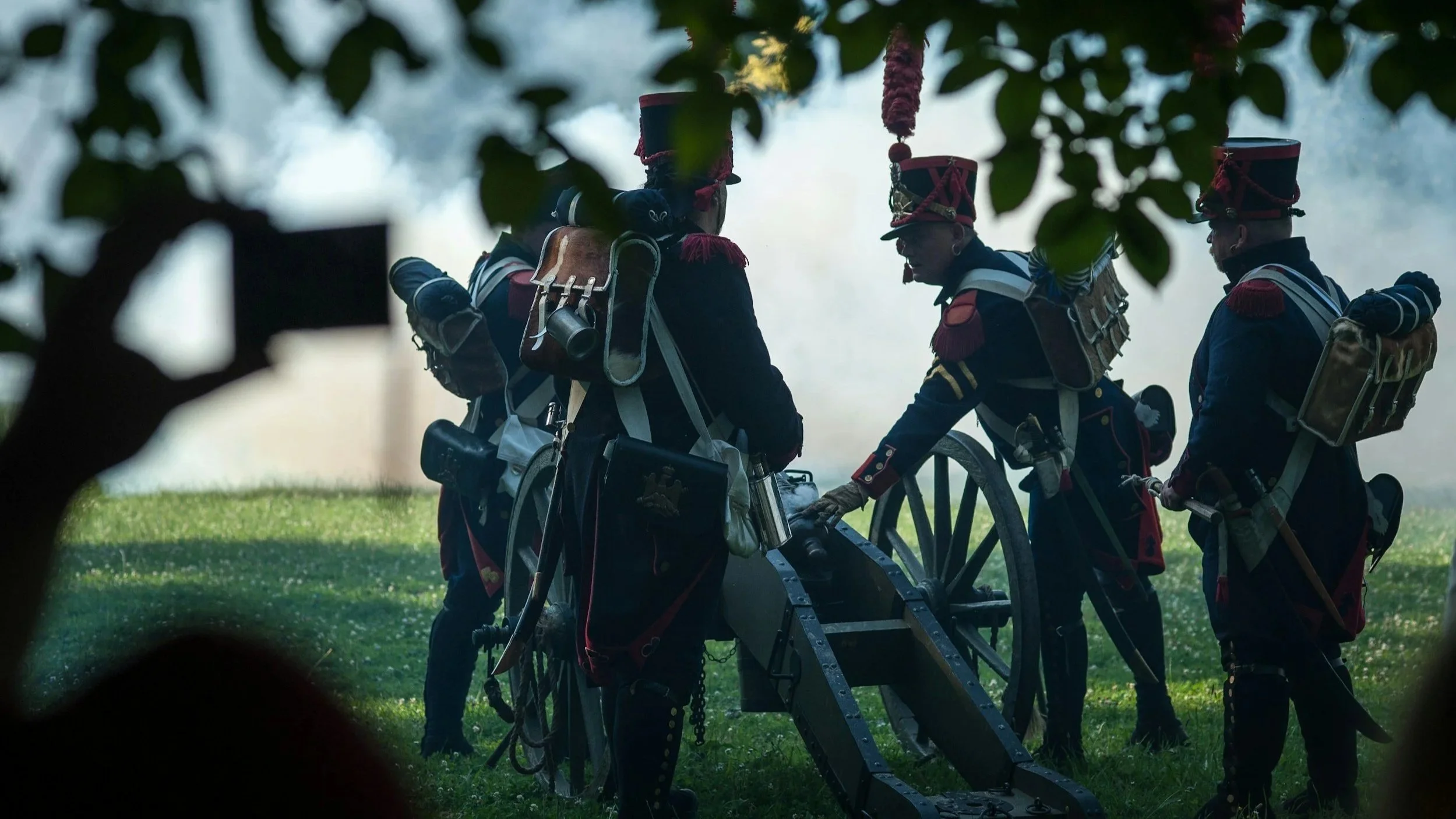
However, decades of structural research by organizations such as the Israel Antiquities Authority have continually validated his spatial accuracy. From the specific layout of Roman siege camps to the exact dimensions of stone-throwing catapult ballistae, the written records of Josephus bridge the gap between ancient literature and hard physical science.
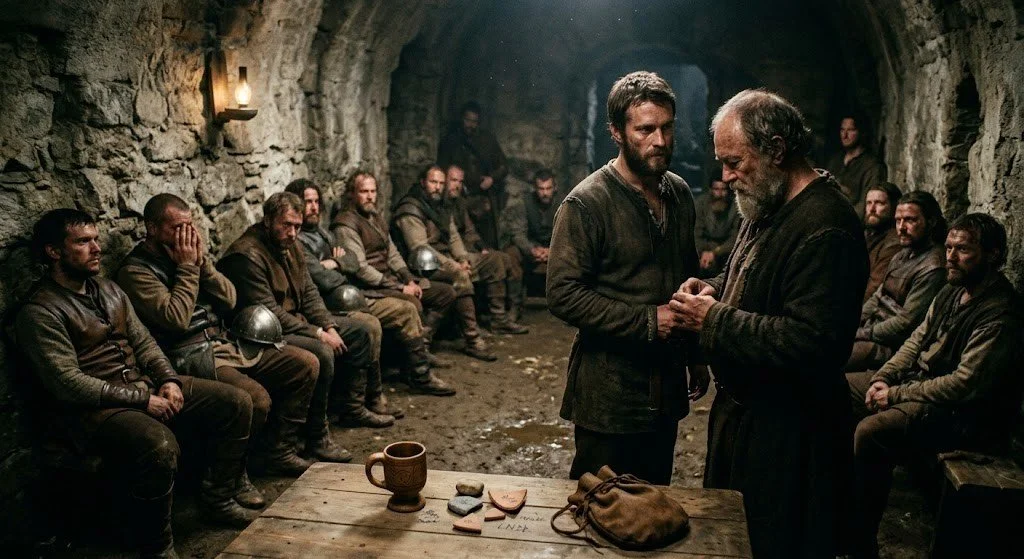
Surrender of Josephus at Jotapata
The Mechanics of the Jotapata Cistern Compact
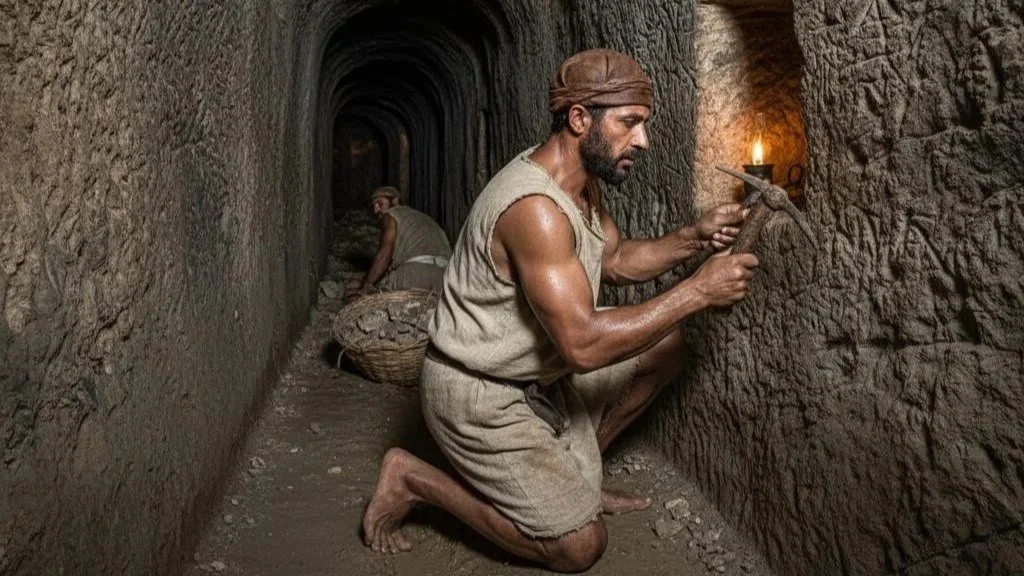
The surrender of Josephus at Jotapata in 67 CE remains one of the most controversial survival episodes in military history, serving as a core point of analysis for institutional historians evaluating his character. According to his own detailed account in The Jewish War, Josephus and forty elite defenders hid within a deep subterranean cavern following the breach of the city walls by Roman forces. As the legionaries closed in, the defenders refused to surrender, demanding a communal suicide pact to preserve their honor.
Josephus, claiming divine inspiration, subtly manipulated the situation by proposing they draw lots to systematically execute one another in a rotating sequence. Through what he describes as either exceptional fortune or direct divine providence, Josephus and a single companion drew the final two lots. Rather than completing the fatal pact, Josephus successfully persuaded his remaining comrade to surrender to the Roman forces. This tactical survival strategy ultimately preserved his life, allowing him to stand before Vespasian and deliver the imperial prophecy that permanently secured his position within the Flavian household.
The Archaeology of the Herodian Infrastructure
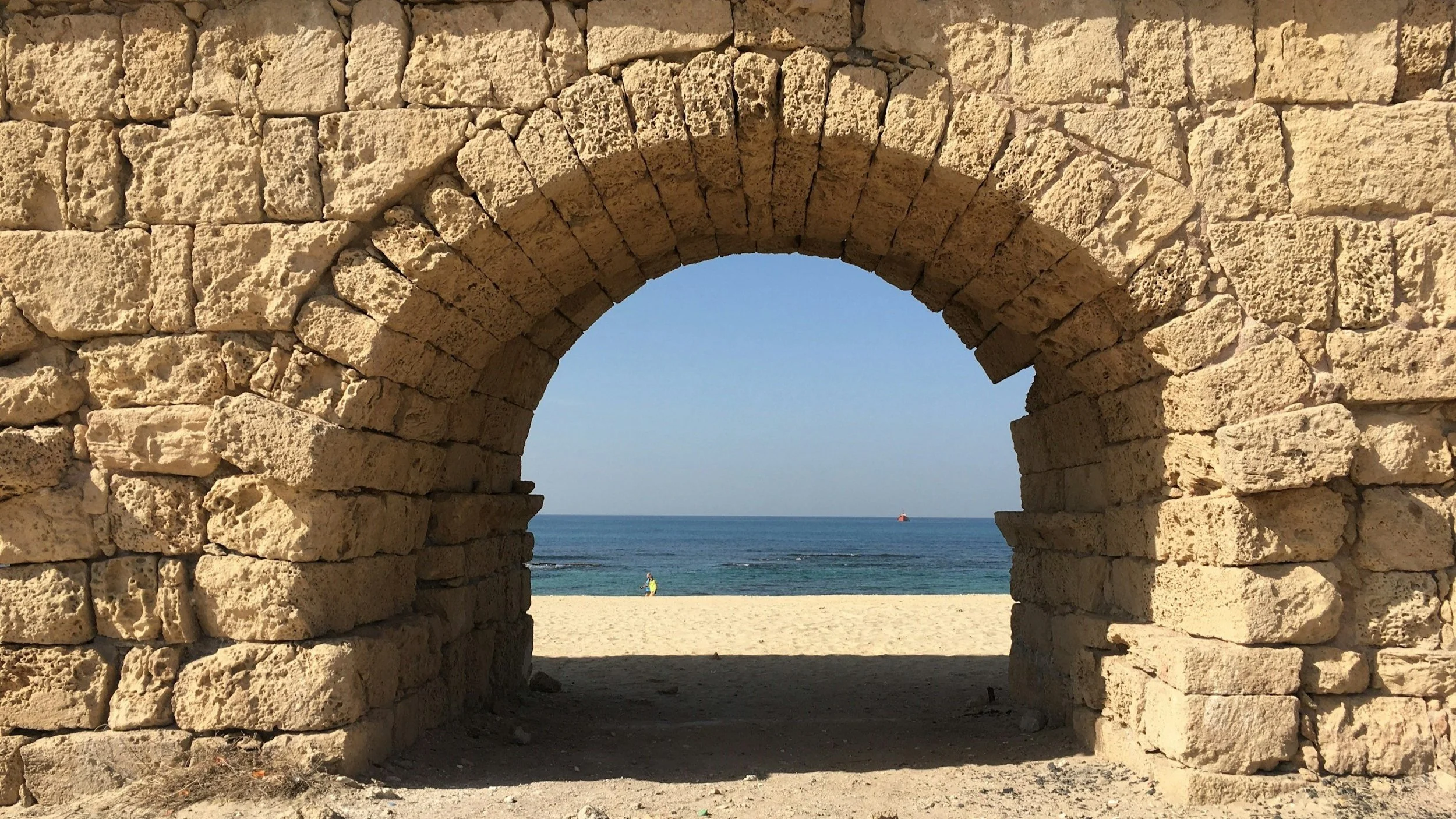
Beyond his role as a political chronicler, Josephus functions as the primary architectural historian of the massive building campaigns initiated by Herod the Great across the Levantine corridor. In Antiquities of the Jews, we are provided with granular data regarding the engineering marvels of Caesarea Maritima, including the sub-aquatic deployment of volcanic pozzolana concrete to construct a massive, artificial deep-water harbor.
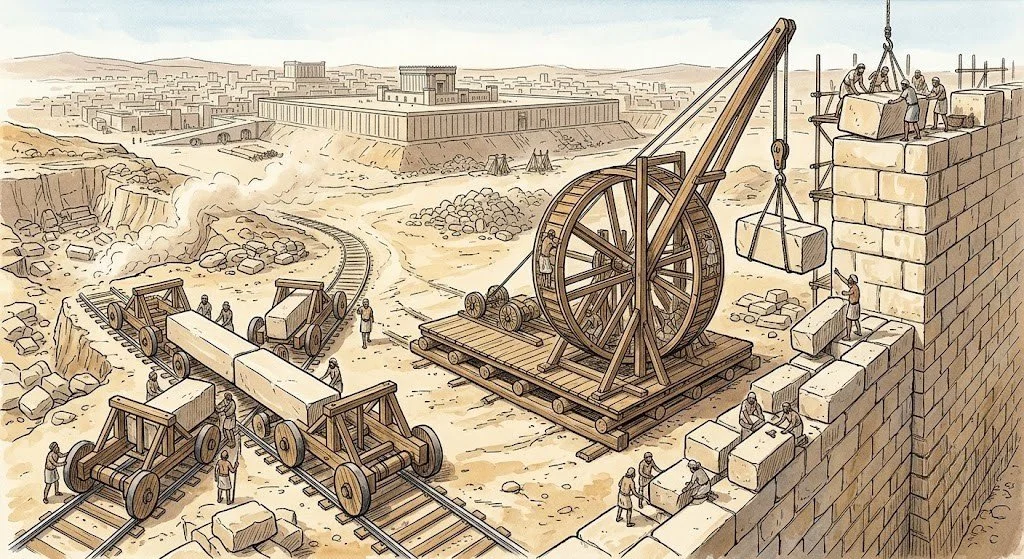
Josephus explicitly describes the construction of Temple Mount's towering retaining walls, the complex vaulted underpinnings of the Royal Stoa, and the advanced water distribution networks feeding remote desert palatial complexes. Modern archaeological assessments of these locations have confirmed his descriptions down to the specific placement of monumental ashlar masonry blocks. His texts provide historical researchers with crucial context regarding the immense scale of labor mobilization, economic expenditure, and Hellenistic architectural influence that defined Judea just prior to its architectural obliteration during the Roman siege of 70 CE.
5 Surprising Facts About Flavius Josephus
He is our primary source for the dramatic final standoff at Masada. Despite the cultural prominence of the Masada narrative, Josephus is the only ancient author who recorded the siege, as he interviewed surviving women and children who escaped the final mass suicide by hiding in the fortress's underground water conduits.
His writings contain some of the earliest non-biblical mentions of Jesus. Known widely to scholars as the Testimonium Flavianum, his passages in Antiquities mention both Jesus and the execution of John the Baptist, making his texts highly sought after by early Christian scribes who meticulously preserved his manuscripts throughout the Middle Ages.
He was granted a permanent estate in conquered Judea by the Roman emperors. Despite living out his later life writing in an apartment inside Rome, Vespasian and Titus compensated Josephus by giving him highly valuable, tax-exempt agricultural land in the Judean plain, replacing his ancestral property that was destroyed during the sack of Jerusalem.
He fought a fierce literary war against rival historians. Josephus wrote an entire autobiographical treatise, Vita, largely to defend his military reputation against a rival Jewish historian, Justus of Tiberias, who had published a competing book accusing Josephus of being a bloodthirsty rebel leader who forced Galilee into war.
He was an elite priest before he ever held a sword. Josephus belonged to the first of the twenty-four priestly courses of Israel, tracing his lineage on his mother’s side directly to the royal Hasmonean dynasty, meaning his early life was spent in the highest tiers of Temple administration rather than in military training.
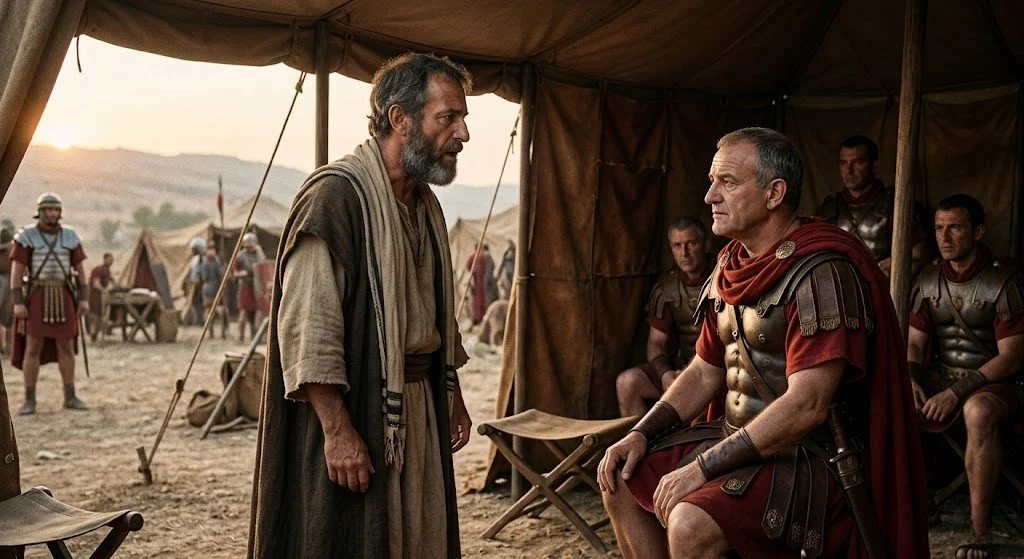
Josephus and Vespasian
Actionable Heritage Suggestions
For researchers and travelers investigating the real-world environments recorded by Flavius Josephus, several world-class heritage sites offer preservation data and historical analysis.
The Israel Museum (Jerusalem)
Factual Overview: This institution houses the premier collection of first-century artifacts, including extensive displays of Roman military weaponry, Judean coins minted during the Great Revolt, and structural remnants from the destroyed Second Temple.
Practical Details: Visitors should focus specifically on the Archaeological Wing to view the actual ballista stones used during the siege of Jerusalem, and explore the Model of Jerusalem in the Late Second Temple Period, which visualizes the city's topography exactly as Josephus described it before its destruction.
Masada National Park (Dead Sea Region)
Factual Overview: This UNESCO World Heritage site preserves the palaces, storehouses, and defensive fortifications built by Herod the Great and later occupied by the Zealot rebels during the final chapter of the Jewish War.
Practical Details: To capture the best historical photography of the Roman siege wall and the massive assault ramp built by the Tenth Legion, ascend via the cable car or Snake Path during the early morning hours when the low sun sharply defines the ancient military earthworks in the desert below.
Caesarea Maritima National Park (Central Coast)
Factual Overview: Built by Herod the Great and named in honor of Caesar Augustus, this monumental ancient port city served as the official administrative headquarters for Roman procurators like Pontius Pilate and Felix.
Practical Details: Walk the ruins of the Promontory Palace and the vast Roman theater; plaques throughout the park cross-reference specific passages written by Josephus describing the construction of the deep-sea harbor and the local ethnic tensions that ultimately sparked the First Jewish-Roman War.
Yodfat Archaeological Site (Lower Galilee)
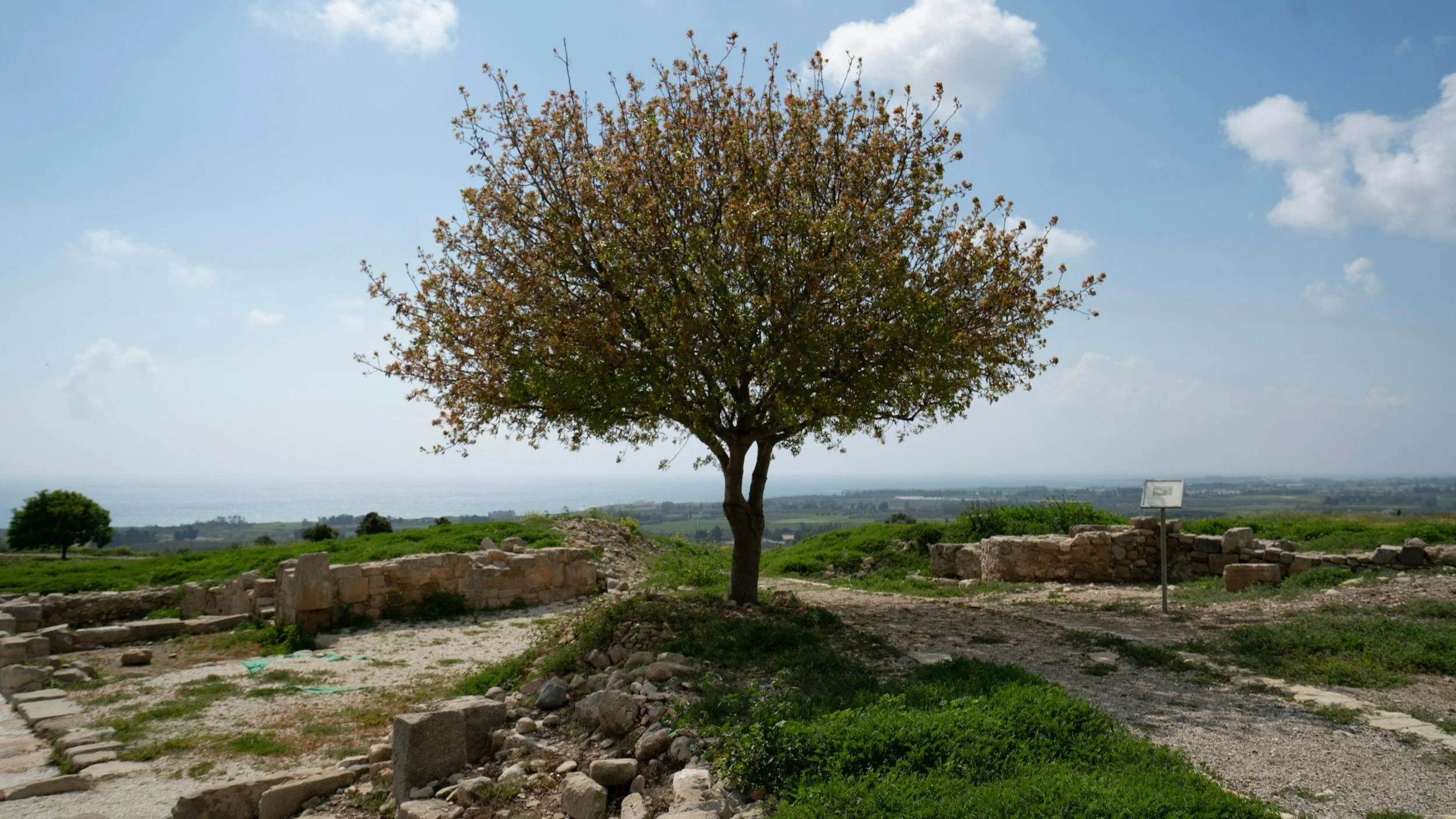
Factual Overview: This site preserves the rugged, steep-sided remnants of ancient Jotapata, the initial mountain stronghold where Josephus commanded Galilee's regional forces and survived the forty-seven-day siege against Vespasian's legions.
Practical Details: The site offers an authentic, less-crowded experience for serious history enthusiasts; hikers can explore the actual ancient cisterns, olive presses, and defensive trench lines while reading the direct battlefield descriptions composed by Josephus from his command post.
No ads, no commercials, just high-quality content.
If you find our work valuable, we would be grateful for your support. Your contribution helps us continue our mission of providing high-quality content and sharing it with an even wider audience. Support Our Mission