Roman Artillery Technology at Jerusalem and Masada
The Roman legions achieved military success during the First Jewish-Roman War (66–73 CE) by utilizing mechanized torsion artillery and heavy siege towers to systematically breach the complex fortifications of Jerusalem and Masada. Driven by the engineering corps of Legio X Fretensis, these advanced machines enabled the Roman army to launch concentrated long-range kinetic bombardments and project psychological dominance over the Jewish defenders.
Today, physical evidence of this ancient technology remains well-preserved across major archaeological sites in Israel, where thousands of excavated ballista stones, arrowheads, and landscape alterations offer direct material proof of classical siege tactics.
Geopolitical Context and the Mechanics of Roman Siege Engineering
The outbreak of the First Jewish-Roman War in 66 CE presented a severe challenge to Roman imperial hegemony across the strategic corridor of the Levant. Faced with highly fortified regional strongholds situated on steep hills or protected by monumental masonry, the Roman high command implemented a systematic doctrine of aggressive siege warfare rather than relying on passive attrition.
The primary objective of Roman engineering was to quickly disrupt defensive infrastructure, clear battlements, and create structural breaches. The arid topography of Judea became a proving ground for highly sophisticated mechanical artillery that combined advanced physics, carpentry, and metallurgy to reduce heavily defended centers.
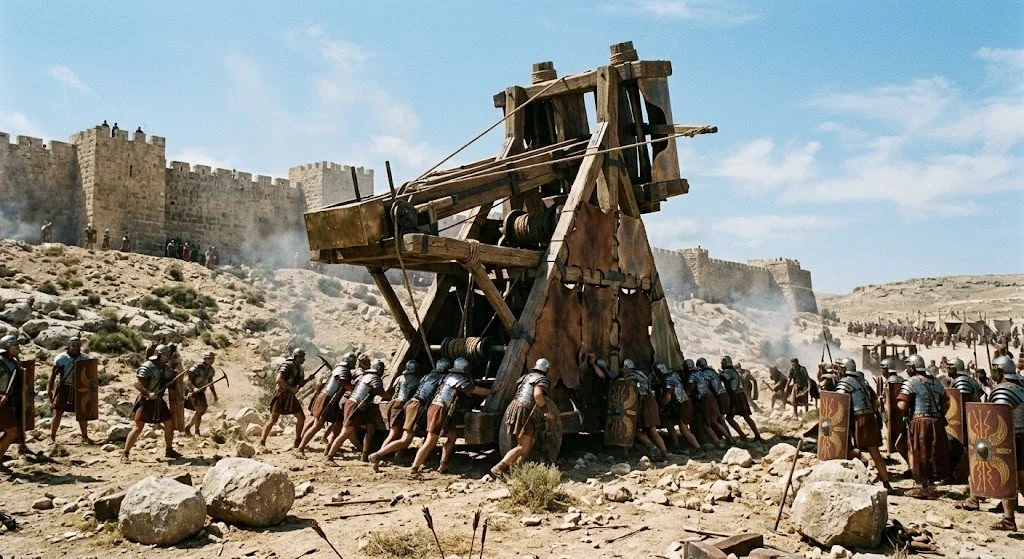
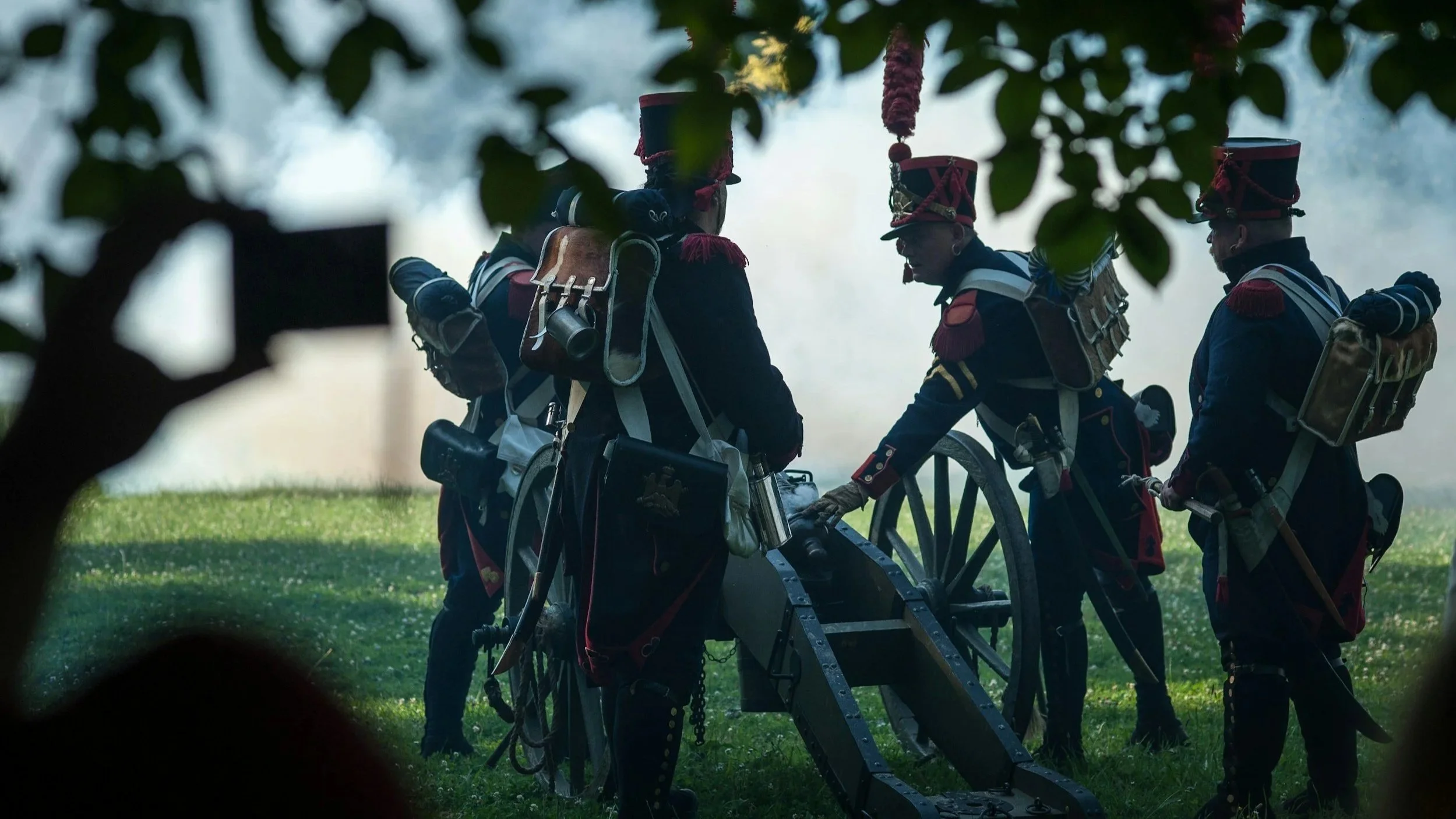
Among the primary mechanical weapons deployed during the suppression of the Jewish rebellion was the heavy ballista, a dual-armed torsion engine engineered to launch large stone spheres or massive iron-tipped bolts. Operating on potential energy stored within tightly twisted skeins of animal sinew and hair, these weapons achieved remarkable muzzle velocities and highly accurate firing paths.
A smaller, highly mobile version known as the scorpio operated as a mechanical sniper rifle, firing armor-piercing projectiles over distances exceeding 300 meters to target defenders on the walls. The destructive output of these weapons is well-documented in classical histories and corroborated by modern archaeological excavations throughout the region.
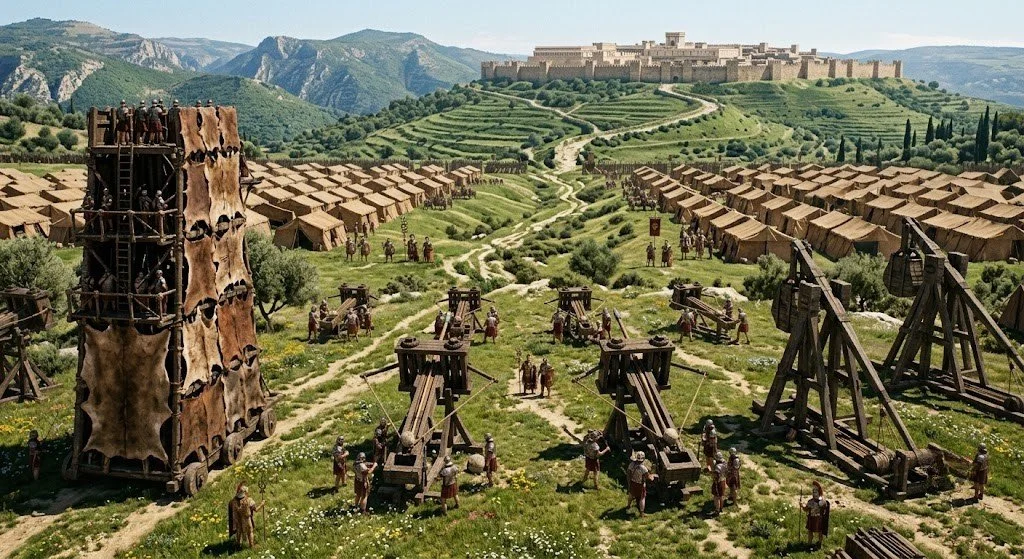
In addition to projectile artillery, the legions utilized the onager, a powerful single-armed torsion catapult designed specifically to lob heavy stone projectiles in high, looping trajectories. This weapon was utilized to shatter the upper battlements of defensive walls, rendering them unsafe for defending archers and stone-throwers.
For direct structural destruction, legions deployed the aries (battering ram), often housed within massive, multi-story wheeled siege towers covered in raw hides to prevent incendiary counterattacks. These mobile towers not only protected the ram crews at the base but also allowed Roman legionaries to match the height of enemy walls, facilitating direct boarding actions once a breach was achieved.
The implementation of these diverse engineering assets culminated in the dramatic sieges of Jerusalem in 70 CE and Masada in 73 CE. At Jerusalem, Titus orchestrated a multi-layered bombardment that systematically breached the city’s three defensive walls, culminating in the destruction of the Second Temple.
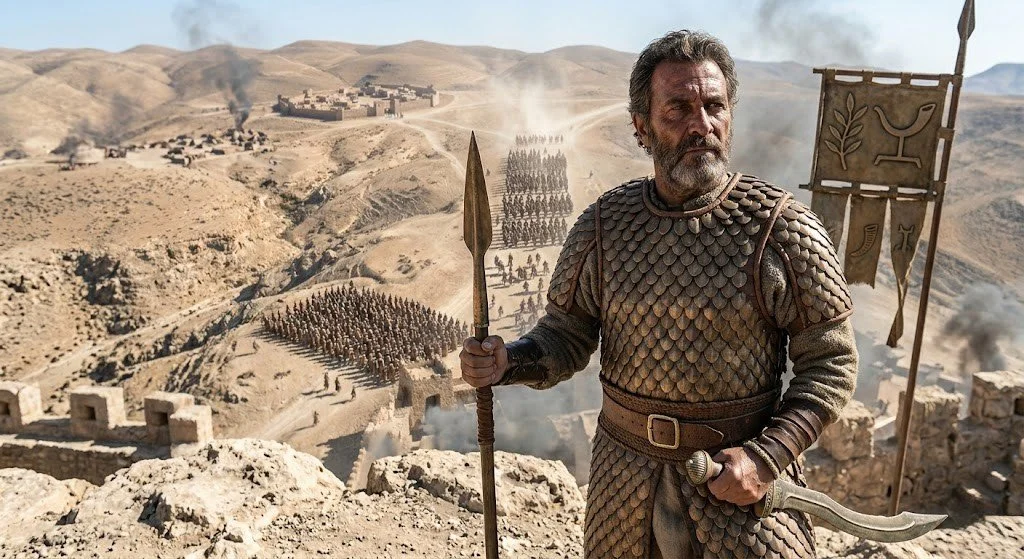
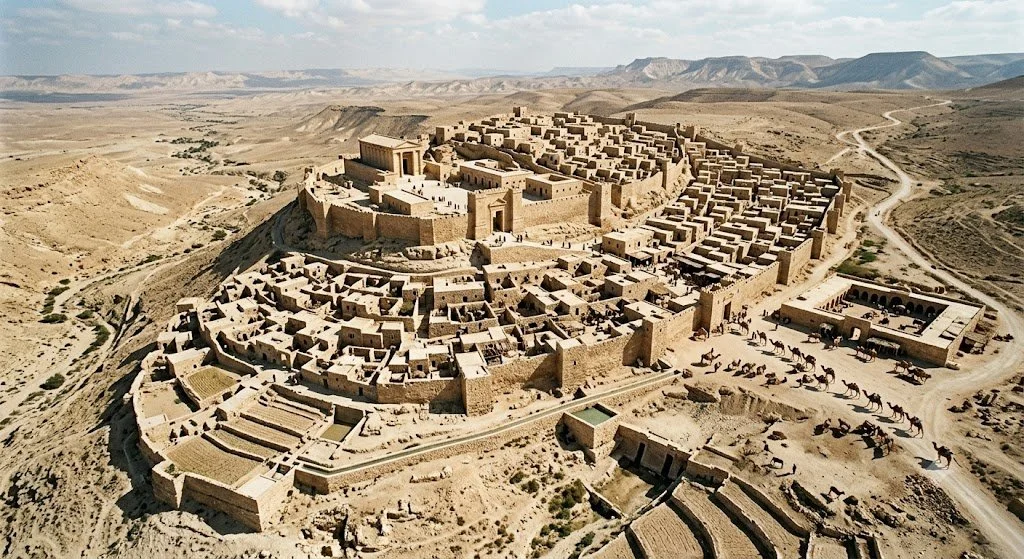
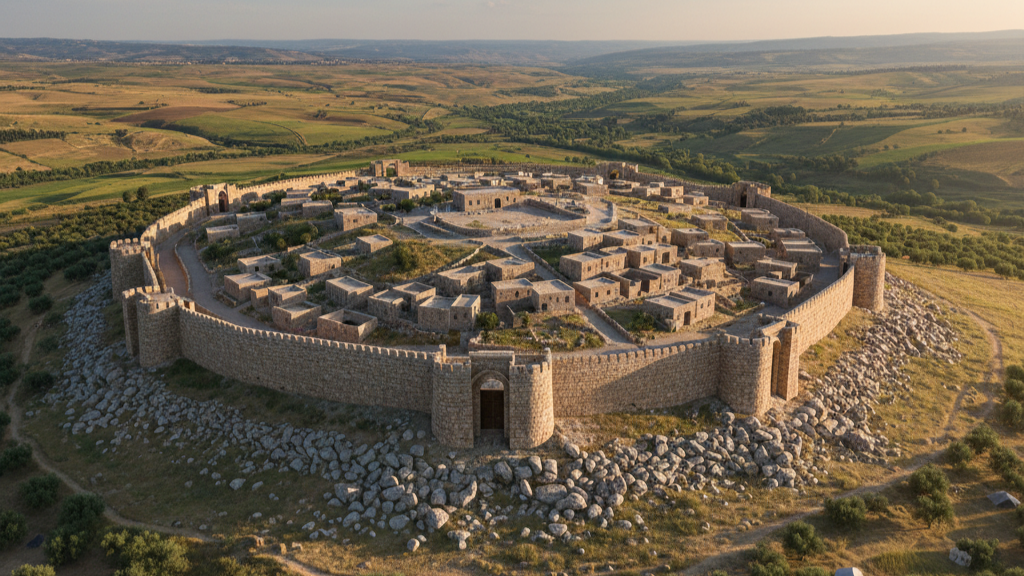
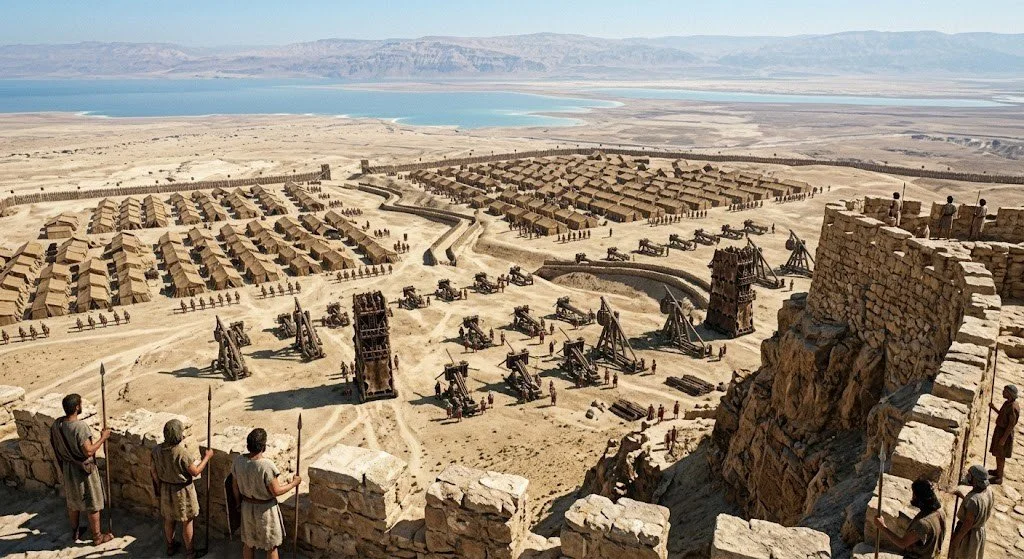
At Masada, Governor Lucius Flavius Silva overcame a sheer 400-meter rocky plateau by constructing a continuous circumvallation wall, eight military camps, and an unprecedented assault ramp on the western bedrock. This massive earthen ramp supported a 26-meter-tall iron-clad siege tower, enabling a heavy battering ram to directly breach the fortress walls and demonstrate total Roman military dominance through uncompromising structural engineering.
Roman Artillery Technology and Siege Warfare at Jerusalem and Masada
Recent computational research conducted by the Israel Antiquities Authority has illuminated the unprecedented scale and sophistication of Roman artillery operations during the climactic sieges at Jerusalem and Masada. By systematically mapping the precise discovery locations of hundreds of recovered ballista stones and weapon fragments, archaeologists have successfully reconstructed the exact positions and firing sectors of the Roman heavy batteries.
At Jerusalem, the data indicates that Roman engineers consolidated their primary artillery lines at tactical high points, such as the northwestern sector near the modern Russian Compound. This positioning allowed the legions to launch high-density, coordinated volleys across distances of 100 to 400 meters, focusing kinetic energy directly onto the city's vulnerable Third Wall to crack its outer defenses.
Meanwhile, at the isolated desert fortress of Masada, artillery batteries were carefully placed on surrounding ridges and integrated directly into the ascending western assault ramp. This positioning provided continuous, suppressive high-angle fire that pinned down the Sicarii defenders and prevented them from sabotaging the advancing heavy battering ram
Deep-Dive Historical Insights
Ballistics Metrics and Projectile Distribution Patterns
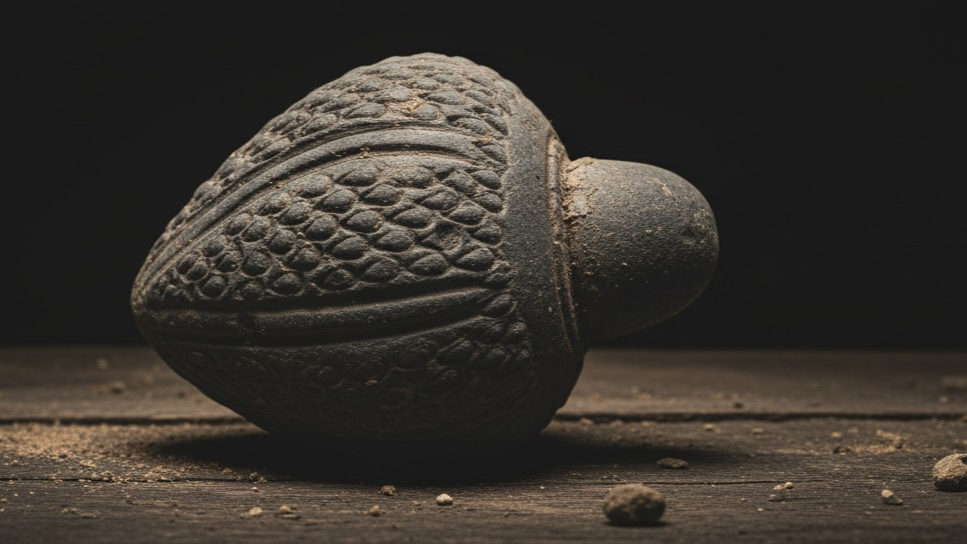
Archaeological surveys conducted across the Jerusalem landscape have yielded over 1,000 distinct ballista stones, providing empirical data regarding Roman bombardment strategies during the 70 CE siege. Analysis of these artifacts reveals a meticulous standardization of ammunition weights, categorized precisely into distinct strategic classes ranging from lightweight anti-personnel spheres weighing two to three kilograms to massive structural demolition stones exceeding twenty-five kilograms.
The spatial distribution of these projectiles around the remains of the Third Wall demonstrates that Roman artillery units established highly organized firing lines roughly 250 to 300 meters from the target zones. This precise distance maximized the kinetic impact of the torsion springs while keeping the artillery crews safely outside the effective range of rebel archers. Furthermore, mineralogical testing confirms that the stones were quarried from local limestone formations immediately adjacent to the military camps, indicating that specialized stonecutters worked continuously alongside artillerymen to maintain a non-stop supply of calibrated ammunition during active bombardments.
Masada Roman siege
Logistics and Construction Timeline of the Masada Assault Ramp
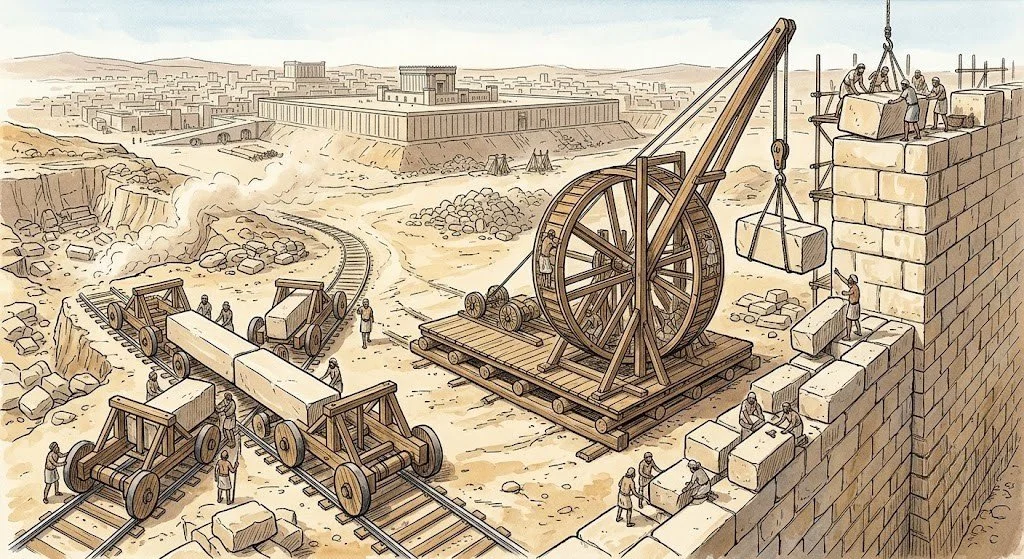
The construction of the Western Assault Ramp at Masada stands as one of the most resource-intensive engineering projects ever executed by a single Roman legion in an arid environment. Spanning a horizontal distance of nearly 300 meters and rising over 60 meters to meet the natural cliffside, the ramp required the movement of approximately 90,000 cubic meters of earth, limestone blocks, and reinforcing timber frames.
Documents and archaeological evaluations indicate that Legio X Fretensis utilized a workforce consisting of thousands of Jewish prisoners of war to perform the manual labor, effectively neutralizing rebel counterattacks from the summit due to the defenders' reluctance to fire upon their own people.
The core of the ramp was engineered using a sophisticated terraced framework of local tamarisk and date palm logs, which prevented the loose desert soil from shifting or collapsing under its own immense weight. This stabilizing technique ensured that the ramp could support the final deployment of a 26-meter-tall iron-clad siege tower, which housed a heavy battering ram and an upper-deck artillery battery designed to suppress the Sicarii defenders.
5 Surprising Facts About Roman Siege Technology
The Romans painted ballista stones white to enhance tactical accuracy. According to historical accounts by Josephus, Jewish defenders on Jerusalem's walls watched for the distinctive white limestone projectiles against the dark sky, prompting Roman engineers to darken the stones with soil to prevent detection.
Torsion springs utilized specialized organic materials for maximum elasticity. Instead of metal springs, Roman artillery relied on massive skeins made of horse hair, animal sinew, which were treated with oil and wax to maintain tension in extreme weather conditions.
The assault ramp at Masada was built over a natural geological formation. Rather than constructing the massive ramp entirely from scratch, Roman military engineers identified a natural spur of rock known as the White Promontory, using it as a structural foundation to drastically reduce the required volume of earthworks.
Roman artillery units utilized specialized optical aiming devices. Long before the invention of modern scopes, engineers used a mechanical leveling system known as a dioptra alongside precise mathematical calibration tables to adjust the elevation and angle of their torsion weapons prior to firing.
The final walls at Masada were breached by fire rather than mechanical force. When the Roman battering ram finally cracked the stone wall, they discovered the defenders had built an inner wall of timber and earth that absorbed the impacts; the Romans subsequently destroyed this secondary barrier by launching incendiary arrows to burn it to the ground.
Modern Masada
Actionable Heritage Suggestions
Masada National Park
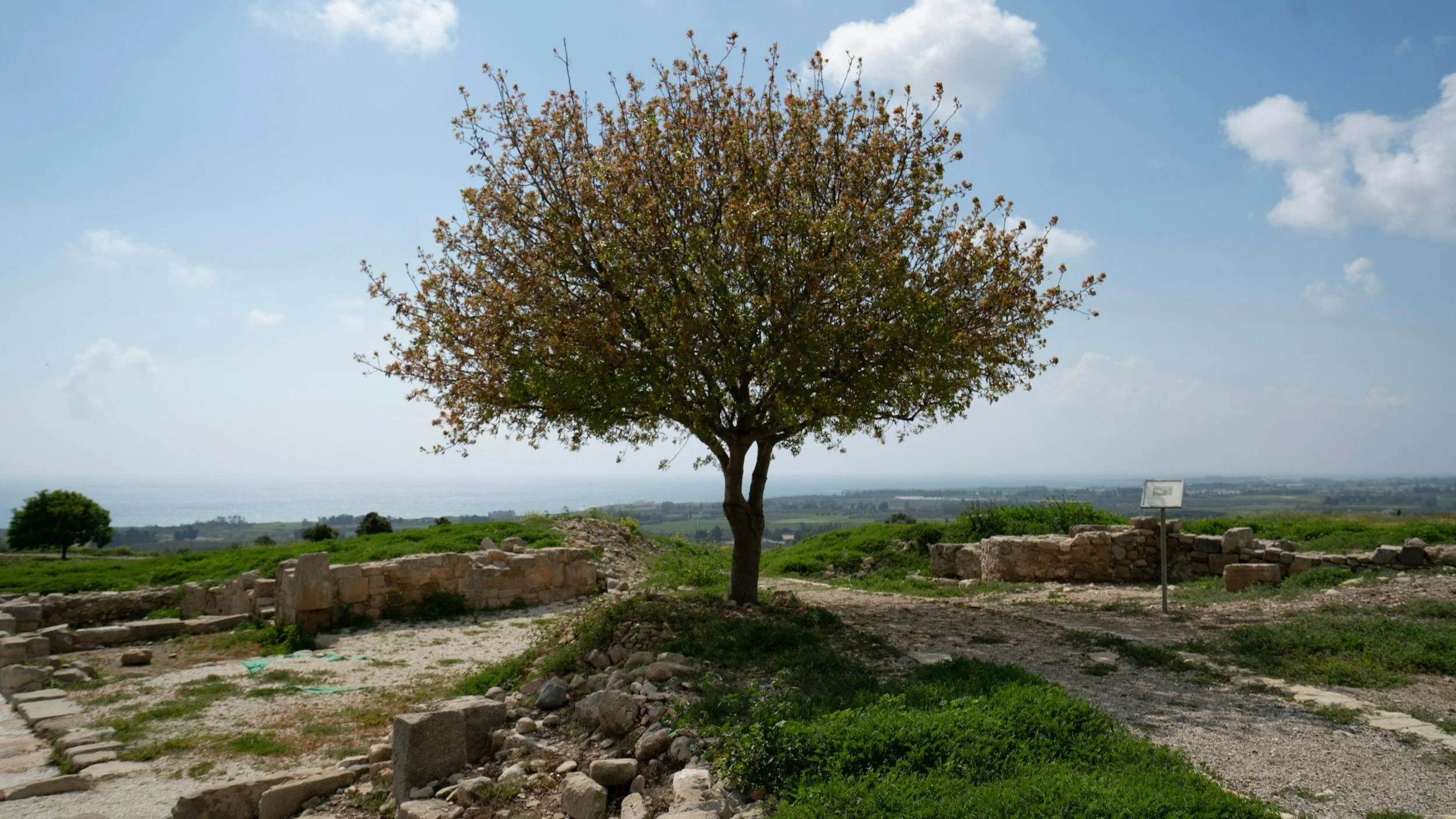
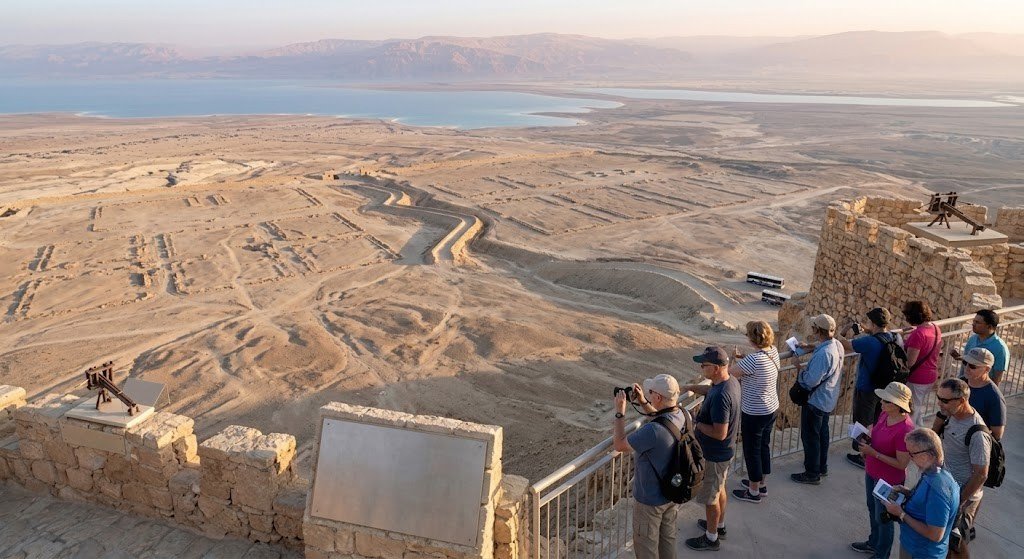
Situated on an isolated rock plateau overlooking the Dead Sea, Masada National Park offers the most intact physical remains of a Roman siege system anywhere in the world. Visitors can view the authentic circumvallation wall, the distinct outlines of the eight Roman military camps, and the monumental Western Assault Ramp from the fortress summit. The site includes a dedicated archaeological museum at the base displaying authentic ballista stones and iron arrowheads recovered during excavations. Photographers looking to capture the geometric layout of the Roman camps should aim for early morning light from the eastern fortress walls.
Location: Eastern edge of the Judean Desert
Key Focus: The Western Assault Ramp and the Roman Siege Camp outlines
Apollonia National Park (Tel Arsuf)
Located on a coastal cliff overlooking the Mediterranean Sea, Apollonia National Park features an extensive collection of full-scale, historically accurate reconstructions of ancient and medieval siege machinery. This open-air display includes fully functional replicas of heavy torsion ballistas, catapults, and trebuchets built to illustrate the evolution of mechanical warfare in the Levant. This site provides an up-close examination of timber frameworks. The coastal path offers an ideal vantage point for photographing these wooden engines against historical fortifications.
Location: Herzliya Coastal Sector
Key Focus: Reconstructed mechanical artillery field and coastal fortress remains
The Israel Museum
The Israel Museum in Jerusalem houses a premier collection of classical antiquities, featuring an array of authentic military hardware recovered from First Revolt destruction layers. The Archaeology Wing contains perfectly preserved limestone ballista balls, bronze scorpio bolt heads, and Roman legionary equipment, complete with detailed explanatory diagrams outlining the physics of torsion warfare. Visitors should pay specific attention to the display cases detailing the 70 CE destruction of Jerusalem's upper city.
Location: Jerusalem, Givat Ram District
Key Focus: The Samuel and Saidye Bronfman Archaeology Wing
The Citadel (Tower of David) Museum
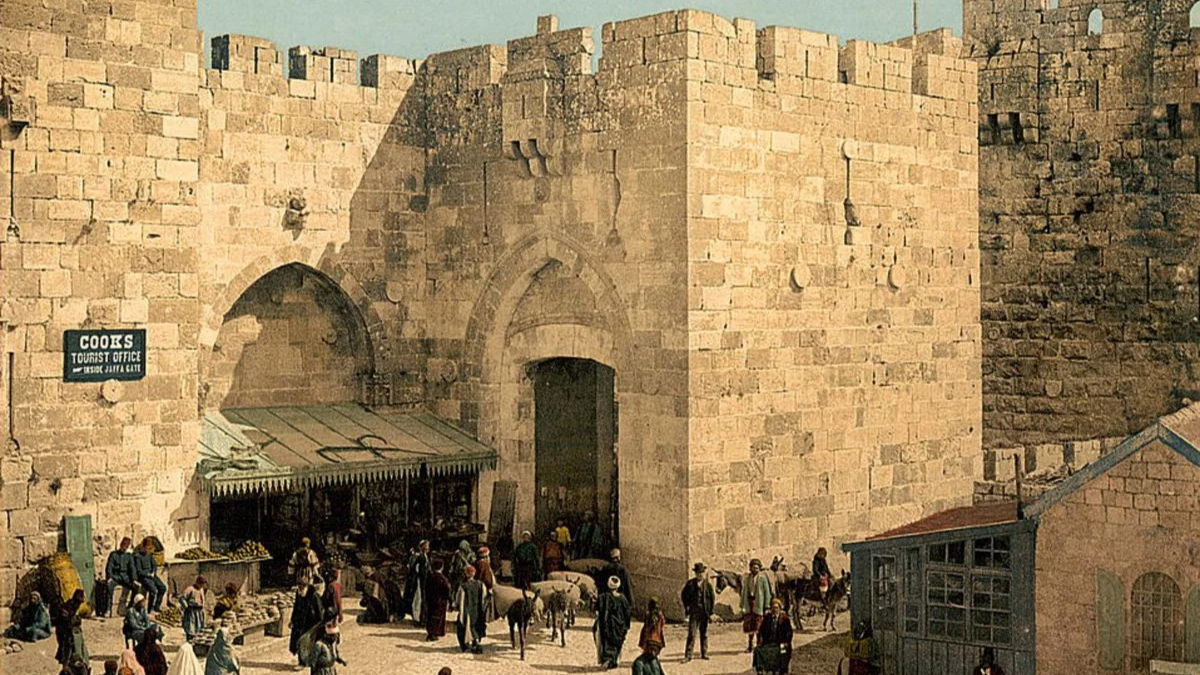
Positioned at the western edge of Jerusalem's Old City, the Tower of David Museum is situated atop the foundational blocks of King Herod's original defensive towers, which faced the brunt of the Roman assault. The outdoor archaeological courtyard features authentic Roman ballista stones left exactly where they impacted the fortifications nearly two millennia ago. The newly updated permanent exhibitions utilize interactive digital displays to map out the exact progression of the Roman siege lines across ancient Jerusalem. The top of the Phasael Tower provides a panoramic view of the ancient topography relevant to the siege.
Location: Jaffa Gate, Jerusalem Old City
Key Focus: Courtyard excavation zones and the historical siege exhibits
No ads, no commercials, just high-quality content.
If you find our work valuable, we would be grateful for your support. Your contribution helps us continue our mission of providing high-quality content and sharing it with an even wider audience. Support Our Mission