Israel Tourist Medical Guide: Pharmacies, Vaccination and Emergencies
Traveling internationally always brings a sense of adventure, but managing health logistics in a foreign country can quickly become overwhelming without the right information. Israel boasts a world-class healthcare system and cutting-edge medical technology, ensuring that top-tier care is always accessible. However, the administrative processes, pharmacy laws, and emergency protocols differ significantly from those in North America or Europe.
Understanding how to navigate these local systems is essential for avoiding unnecessary delays and expenses. Many travelers mistakenly assume that health regulations are uniform worldwide, leading to complications when trying to replace lost medications or seek care for minor ailments. This comprehensive guide provides the essential operational knowledge required to handle medical situations seamlessly during a visit.
1. Bringing Personal Medication Into Israel
Proper preparation before arrival is key to ensuring that personal maintenance medications pass smoothly through border control and remain accessible throughout the trip.
The 90-Day Rule: Tourists are legally permitted to bring up to a 90-day supply of personal maintenance medications (such as blood pressure, thyroid, or cholesterol treatments) in their hand luggage. These must be for personal use only.
The Warning on Controlled Substances: Heavy painkillers, sleeping aids, and ADHD medications (such as Adderall or Ritalin) fall under strict psychotropic regulations. Travelers carrying these substances must keep them in their original pharmacy packaging, clearly labeled with their name, and carry a typed doctor’s letter detailing the medical necessity.
The Packing Tip: Given contemporary airport transit volatility, vital medications should never be placed in checked baggage. Always carry them in carry-on luggage to prevent loss or temperature-related spoilage.
2. Navigating Israeli Pharmacies (Beit Merkachat)
The Main Chains
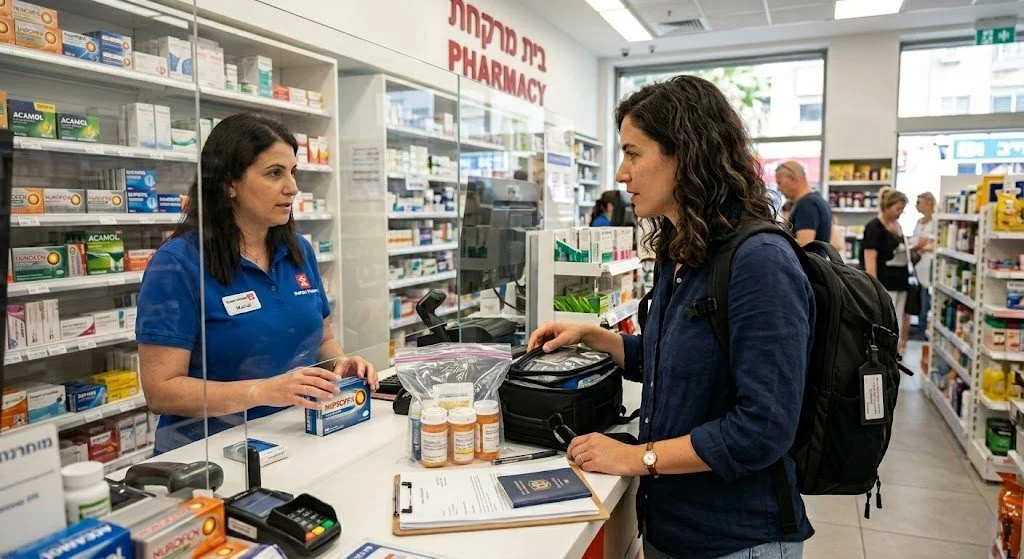
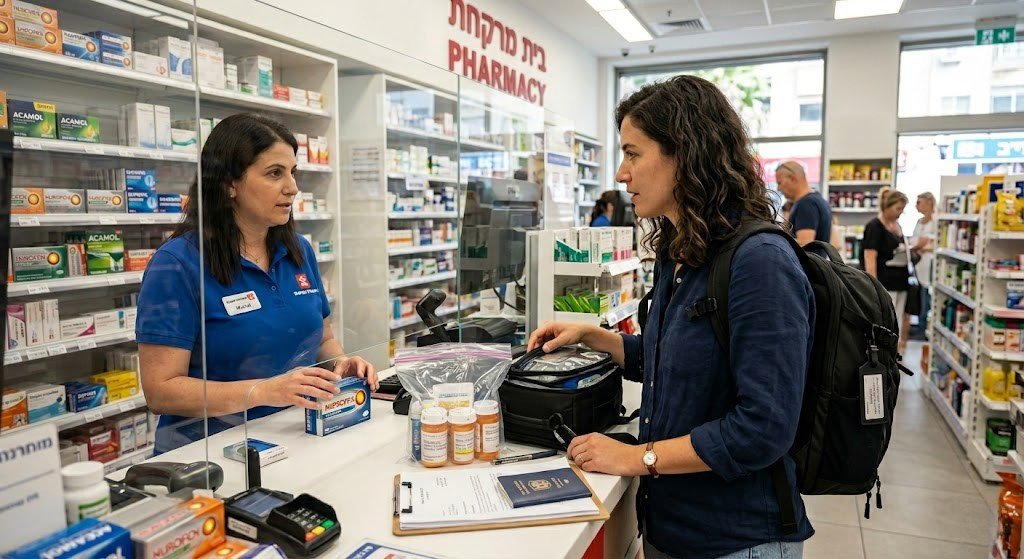
The absolute giant of Israeli pharmacy retail is Super-Pharm, a chain found in virtually every city, commercial district, and major shopping mall. For independent options, look for signs reading Beit Merkachat - בית מרקחת (the Hebrew term for pharmacy).
The Foreign Prescription Rule
Israeli pharmacies cannot legally honor foreign prescriptions. If personal medication is lost, damaged, or runs out, a note from a US or European doctor will not be accepted. To replace a prescription, tourists must secure a private local consultation through services like Tel Aviv Doctor or a hotel's on-call medical service. A licensed Israeli physician will then issue a local digital prescription that can be filled at any counter.
The Counter Barrier
Unlike supermarkets or drugstores in North America where rows of allergy pills, strong ibuprofen, or heartburn medications sit freely on open shelves, Israel restricts access to basic medicinal compounds. Almost all over-the-counter (OTC) medications are kept behind the secure pharmacy counter. Visitors must join the pharmacy line and consult directly with the pharmacist to request these items, even for basic pain relief.
3. Mandatory Vaccinations and Tap Water Safety
Vaccinations
There are no mandatory vaccine requirements for travelers entering Israel from North America, Europe, or Oceania. Standard routine immunizations—such as Tetanus, Diphtheria, Pertussis, and MMR—are all that are recommended by global health authorities.
Drinking Water
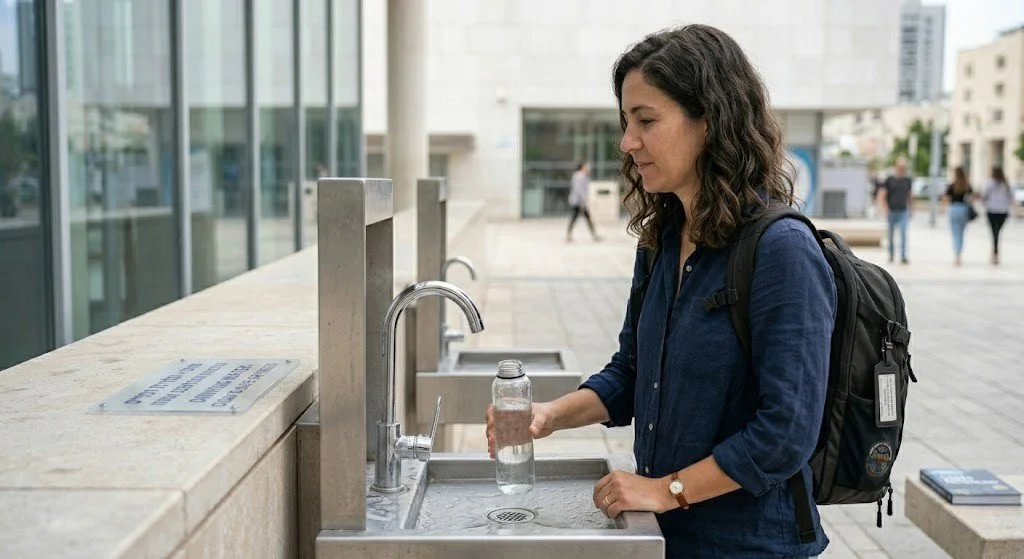
The tap water in Israel is 100% safe to drink everywhere. As a global leader in water desalination and advanced purification technology, the country maintains an exceptionally clean public water infrastructure. The water may taste slightly different due to specific mineral processing techniques, but it is entirely pristine.
Health Alert: Due to the intense Mediterranean and desert heat, the primary environmental health risk is not water quality, but acute dehydration. Travelers should carry a reusable water bottle at all times and consume fluids consistently throughout the day.
4. Where to Go in a Medical Emergency: Hospitals and First Aid
Should a serious illness or injury occur, understanding the layout of the healthcare system ensures rapid, effective treatment.
The Emergency Number: Dial 101 for Magen David Adom (the Israeli equivalent of the Red Cross and the national ambulance service).
Terem Clinics (The Urgent Care Alternative): For non-life-threatening issues—such as deep cuts requiring stitches, minor fractures, infections, or severe dehydration—travelers should visit a Terem Urgent Care Clinic instead of a hospital emergency room. Terem facilities operate across the country and are significantly faster and more cost-effective for walk-in care.
Major Medical Centers by Region
For acute trauma, major illnesses, or specialized care, proceed to one of the primary regional medical hubs: Region Hospital Name Key Features Tel Aviv / Central Ichilov Hospital (Souroka Medical Center)Centrally located in Tel Aviv with a dedicated medical interface for international tourists. Jerusalem Hadassah Medical Center (Ein Kerem / Mount Scopus)World-renowned trauma center and research hospital. North (Haifa) Rambam Health Care Campus The primary medical center for northern Israel, highly experienced in emergency medicine.
Actionable Medical Healthcare Pathways
When experiencing a health issue on the ground, use this sequential framework to select the appropriate tier of care:
Visit a Pharmacy Counter
Use Case: Minor needs like pain relief (Advil/Paracetamol), bandages, or topical creams.
Action: Locate the nearest Super-Pharm, walk past the cosmetics section to the back pharmacy counter, and ask the pharmacist directly for the local equivalent of the required over-the-counter medication.
Locate a Terem Urgent Care Clinic
Use Case: Non-life-threatening illnesses, minor injuries, stitches, or high fevers.
Action: Bypass the hospital emergency room to save time. Walk into a local Terem clinic, presenting a passport and travel insurance documentation at the reception desk for prompt treatment.
Dial 101 or Proceed to a Major Hospital ER
Use Case: Severe, acute medical crises or major physical trauma.
Action: Call 101 immediately to coordinate emergency ambulance transport, or arrange immediate transit to a regional center like Ichilov or Hadassah.
Recommended Health and Wellness Locations
For travelers seeking medical services, preventative care, or specific wellness supplies, these operating facilities offer reliable solutions:
Tel Aviv Doctor
This private clinic specializes in providing medical care tailored specifically for international travelers, expats, and tourists who need English-speaking practitioners. It is an ideal facility for securing valid local prescriptions when foreign medications are lost.
Practical Info: Located on Basel Street 46 in Tel Aviv. Opening hours are generally Sunday through Thursday from 8:00 AM to 8:00 PM, and Friday from 8:00 AM to 1:00 PM. Appointments can be booked online, which is the recommended method for minimizing wait times. Link .
Super-Pharm Dizengoff Center
This is one of the largest and most centrally located branches of Israel’s premier pharmacy chain, situated inside a major commercial hub in Tel Aviv. It features an extensive pharmacy department well-stocked with international brands and local equivalents.
Practical Info: Located in the Dizengoff Center, Tel Aviv. Open Sunday through Thursday from 8:30 AM to 11:00 PM, Friday from 8:30 AM to 4:00 PM, and Saturday after Shabbat (approximately 8:00 PM to 11:00 PM). The ideal time to visit to avoid crowds is weekday mornings before 11:00 AM.
Terem Urgent Care Jerusalem (Romema)
The flagship clinic of Israel’s leading urgent care network, designed to handle non-life-threatening medical emergencies efficiently without the long wait times associated with traditional emergency rooms.
Practical Info: Located at 4 Hamem-Gimel Street, Jerusalem. This location operates 24 hours a day, 7 days a week, including on Shabbat and holidays. Visitors should bring their passport and physical travel insurance card; the recommended dish/tip is to check in online via their portal if possible to view live wait times.
Surprising Facts About Israeli Medical Infrastructure
The historical trajectory of Israel's water management system reflects an extraordinary transition from severe scarcity to structural abundance. During the mid-twentieth century, the nation faced critical water shortages, relying heavily on the fluctuating levels of the Sea of Galilee and underground aquifers to meet basic municipal demands.
In response to this existential vulnerability, national planners and engineers pioneered massive investments in seawater desalination and advanced wastewater recycling systems. Today, approximately 80 percent of Israel’s domestic municipal water supply is sourced directly from the Mediterranean Sea through massive desalination facilities along the coast.
This technologically processed water undergoes meticulous purification and mineralization routines to ensure it meets exceptionally high health standards before entering the public grid. Consequently, the pristine tap water available to tourists today is the product of one of the most sophisticated environmental engineering networks on earth.
Thenational emergency response system in Israel utilizes an advanced crowd-sourced model that dramatically reduces response times in dense urban environments. Magen David Adom coordinates a vast network of thousands of medically trained volunteers who remain on standby during their daily routines.
When an emergency call is placed to the national 101 number, a proprietary GPS localization algorithm instantly alerts the closest trained volunteers via a specialized mobile application. Many of these first responders operate custom-designed "ambucycles"—motorcycles heavily modified to carry advanced life support equipment, including defibrillators and oxygen therapy units.
These agile vehicles can easily bypass heavy urban traffic jams and narrow historical alleyways that would completely block a standard ambulance. As a result of this decentralized, highly mobile infrastructure, the initial response time for first-aid intervention in major cities is often under three minutes, providing a remarkable safety net for both residents and international visitors.
Dos and Don'ts for Your Visit
Dos
Do carry a typed doctor’s letter and original packaging for any regulated substances like ADHD medications or strong sleep aids.
Do head to a Terem clinic rather than a hospital emergency room for minor injuries, stitches, or simple infections to save time and money.
Do drink the tap water freely, but ensure continuous hydration to counter the strong Mediterranean climate.
Do keep a digital copy of your travel insurance policy and passport easily accessible on your phone.
Don'ts
Don't pack essential daily maintenance medications in checked luggage.
Don't expect to find common pain relievers or allergy medications on open supermarket shelves; go straight to the pharmacy counter.
Don't attempt to use a foreign prescription at an Israeli pharmacy; plan ahead to obtain a local digital alternative if needed.
Don't forget to check pharmacy operating hours on Fridays, as most locations close early in the afternoon for the Sabbath.
No ads, no commercials, just high-quality content.
If you find our work valuable, we would be grateful for your support. Your contribution helps us continue our mission of providing high-quality content and sharing it with an even wider audience. Support Our Mission