Beyond Jerusalem and Tel Aviv: Israel’s "Second City"
Published: Aug 03, 2026
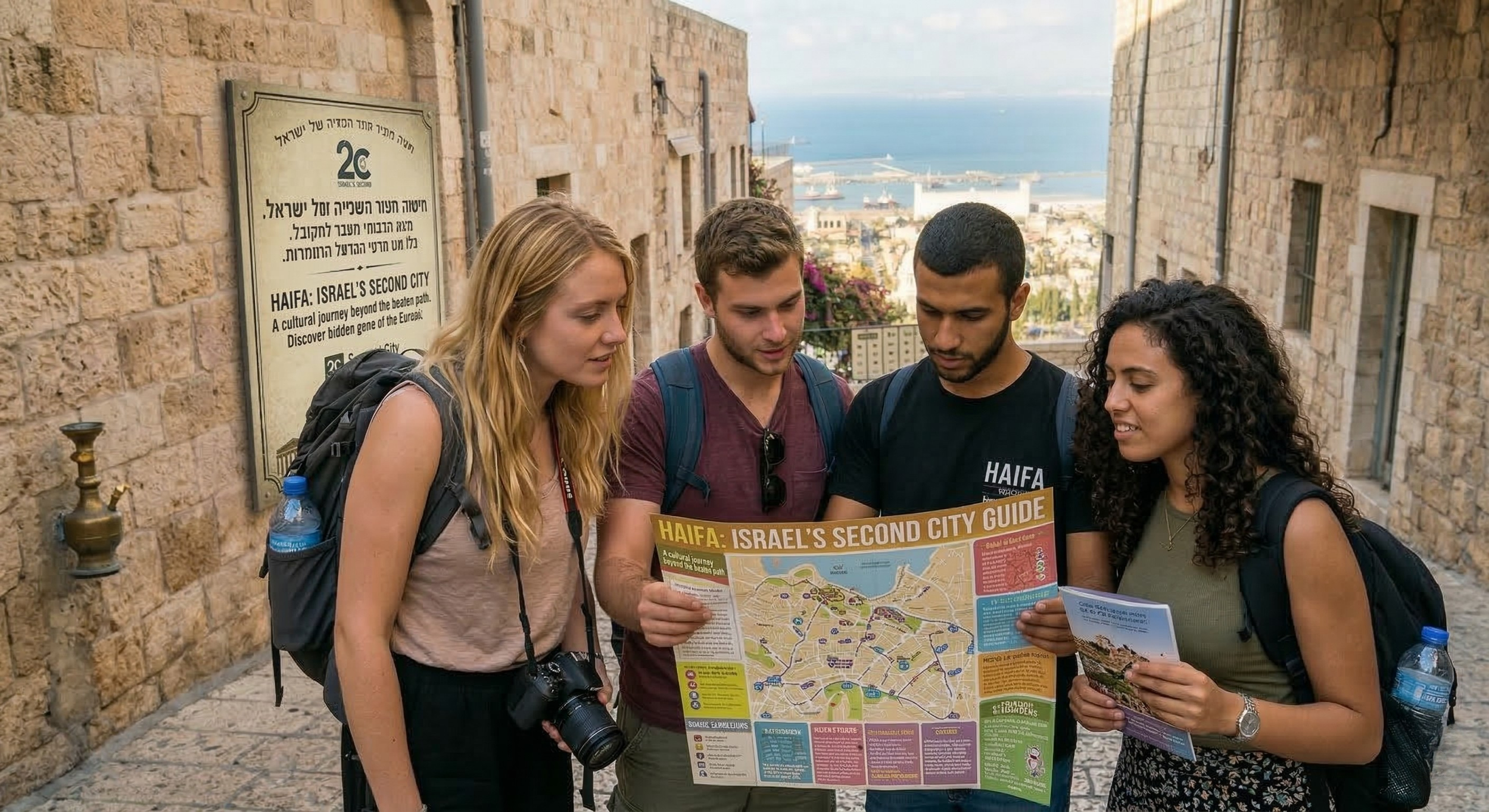
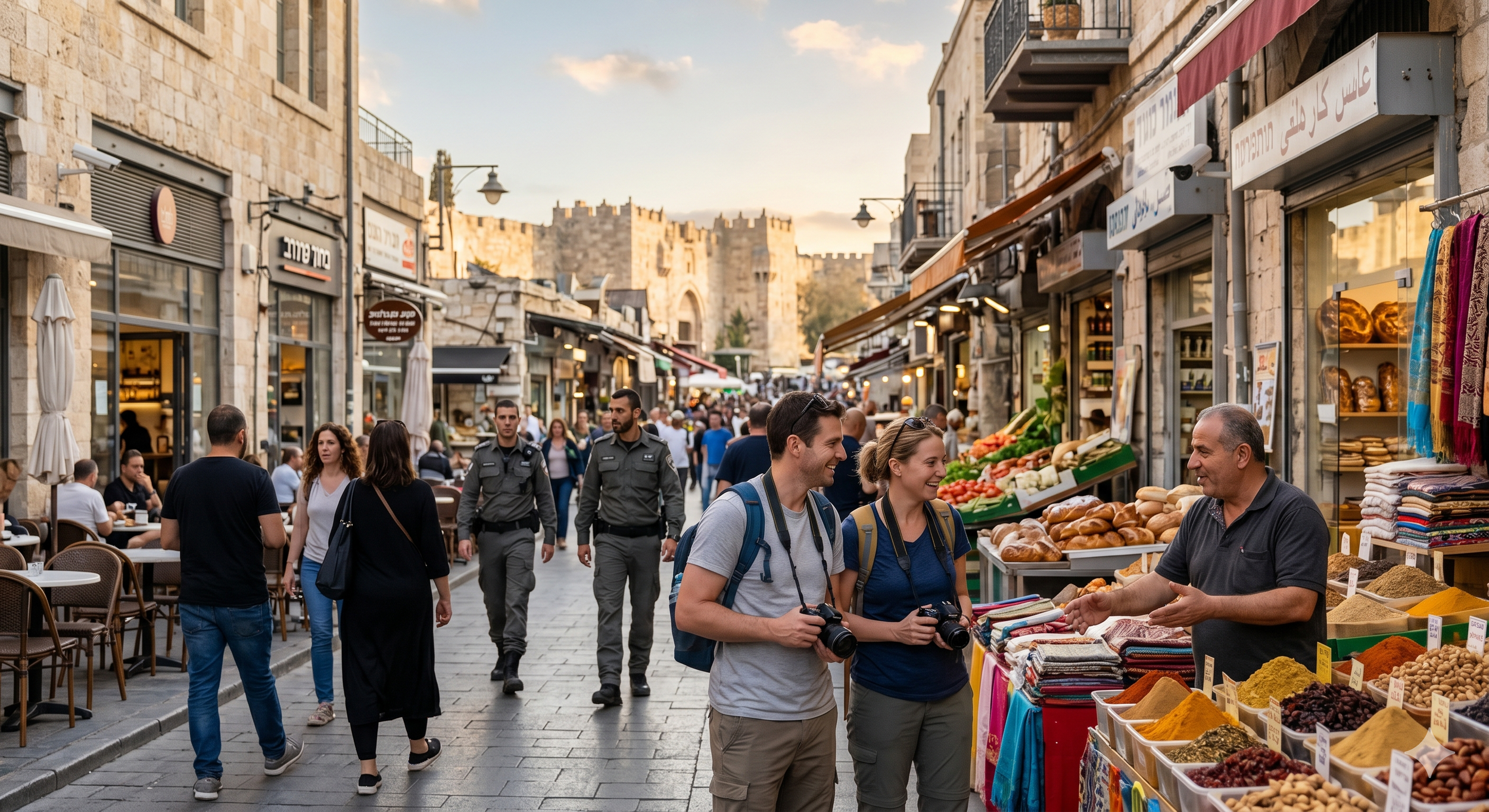
The global travel landscape of 2026 is defined by a significant shift toward "meaning over mileage." As major urban hubs like Tel Aviv and Jerusalem face increasing congestion and rising costs, a sophisticated class of travelers is turning their attention to Israel’s secondary urban centers.
These cities offer a more grounded, authentic experience, allowing visitors to engage with the country’s diverse cultural fabric without the frantic pace of the primary tourist corridors. The "Second City" movement is not merely about finding cheaper alternatives; it is about discovering the nuanced identities of places that have long existed in the shadow of the capitals.
Haifa and Beersheba represent the vanguard of this movement. While once considered industrial or administrative waypoints, both cities have undergone profound transformations. Haifa, with its cascading terraces and Mediterranean maritime heritage, and Beersheba, the burgeoning "Capital of Opportunity" in the Negev, now provide the infrastructure and cultural depth required for primary-destination status.
This guide explores how these cities are leveraging their unique geographies and histories to capture the imaginations of independent travelers in 2026.
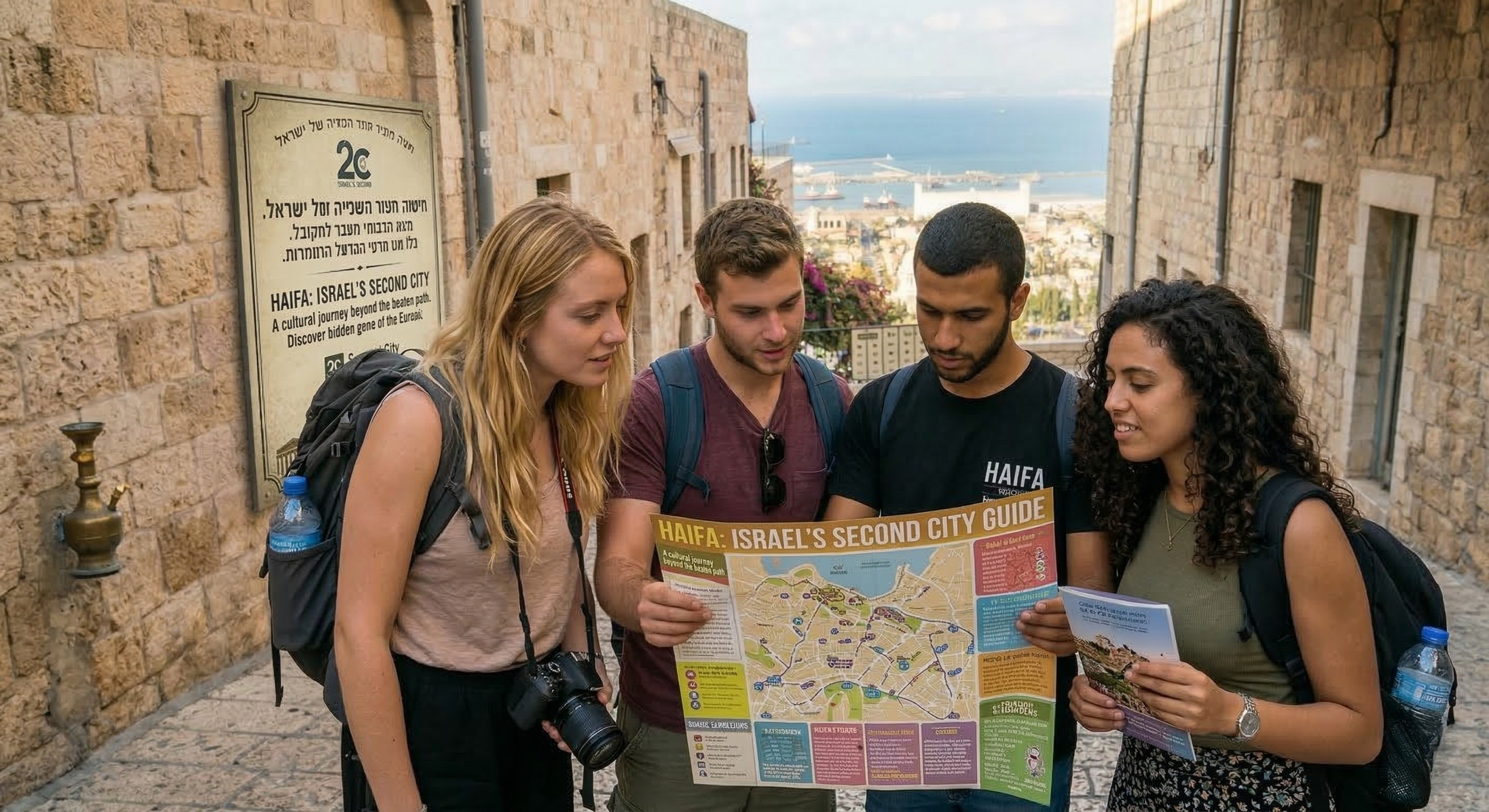
Choosing the path less traveled in Israel facilitates a deeper connection to the local community and a more sustainable approach to tourism. By distributing economic benefits to the north and south, travelers help alleviate the seasonal pressure on the nation’s core infrastructure.
The result is a more relaxed itinerary, better value for high-end boutique experiences, and an opportunity to witness the rapid evolution of Israel’s urban frontiers firsthand.
Haifa: The Vertical City of Coexistence
Haifa’s allure in 2026 is anchored in its distinct verticality. Rising from the Mediterranean port to the crest of Mount Carmel, the city is a masterclass in urban planning and natural beauty. The German Colony, located at the base of the mountain, serves as the city’s social heart. Historically established by the Templars in the 19th century, this district has been revitalized into a sophisticated promenade lined with red-tiled roofs, upscale eateries, and boutique shops. The architectural preservation here provides a tangible link to the past while hosting a vibrant, modern social scene.
The city's upper ridge offers one of the most striking urban vistas in the Middle East. From the heights of the Carmel district, visitors can trace the "Stairs Track," a series of historical public staircases that weave through residential neighborhoods down to the harbor. This vertical journey offers a glimpse into the daily lives of residents and the architectural layers of the city.
In 2026, these routes have been enhanced with local art installations and interpretive signage, making the descent a curated historical experience.
Beyond the aesthetics, Haifa is a model of social integration. The neighborhood of Wadi Nisnas, located just a short walk from the German Colony, offers some of the most authentic culinary experiences in the country. Here, the "Coexistence" movement is lived daily, as local vendors, artists, and residents from diverse backgrounds share the narrow streets.
In 2026, the city’s lower area has seen a surge in specialized wine bars and craft breweries, particularly in the renovated Turkish Market area, which comes alive with live performances and artisan stalls in the evenings.
Beersheba: The Innovation Hub of the Negev
Further south, Beersheba is shedding its image as a remote desert outpost. As the gateway to the Negev, the city is now a center for technological and cultural innovation.
The Old City of Beersheba provides a stark and beautiful contrast to the modern high-tech parks on its periphery. Constructed during the Ottoman period, it is the only planned city built by the Turks in the region. Today, these limestone buildings house various independent galleries and cultural centers.
Travelers in 2026 will find a city that celebrates its desert heritage through "Urban Oasis" projects—a series of 30 water features and fountains that cool the city and create unique public spaces. These installations, combined with the city's Brutalist architecture, create a visual landscape unlike anywhere else in the country.
Beersheba also serves as the ideal base for exploring the archaeological and natural wonders of the south. Tel Beersheba, a UNESCO World Heritage site, offers insights into Iron Age urban planning and ancient water systems. The city’s proximity to the "Makhteshim" (erosion craters) and Bedouin cultural centers allows for a comprehensive desert experience. The 2026 traveler is no longer just passing through on the way to Eilat; they are staying to witness the synergy between ancient history and the cutting-edge future being built in the sands.
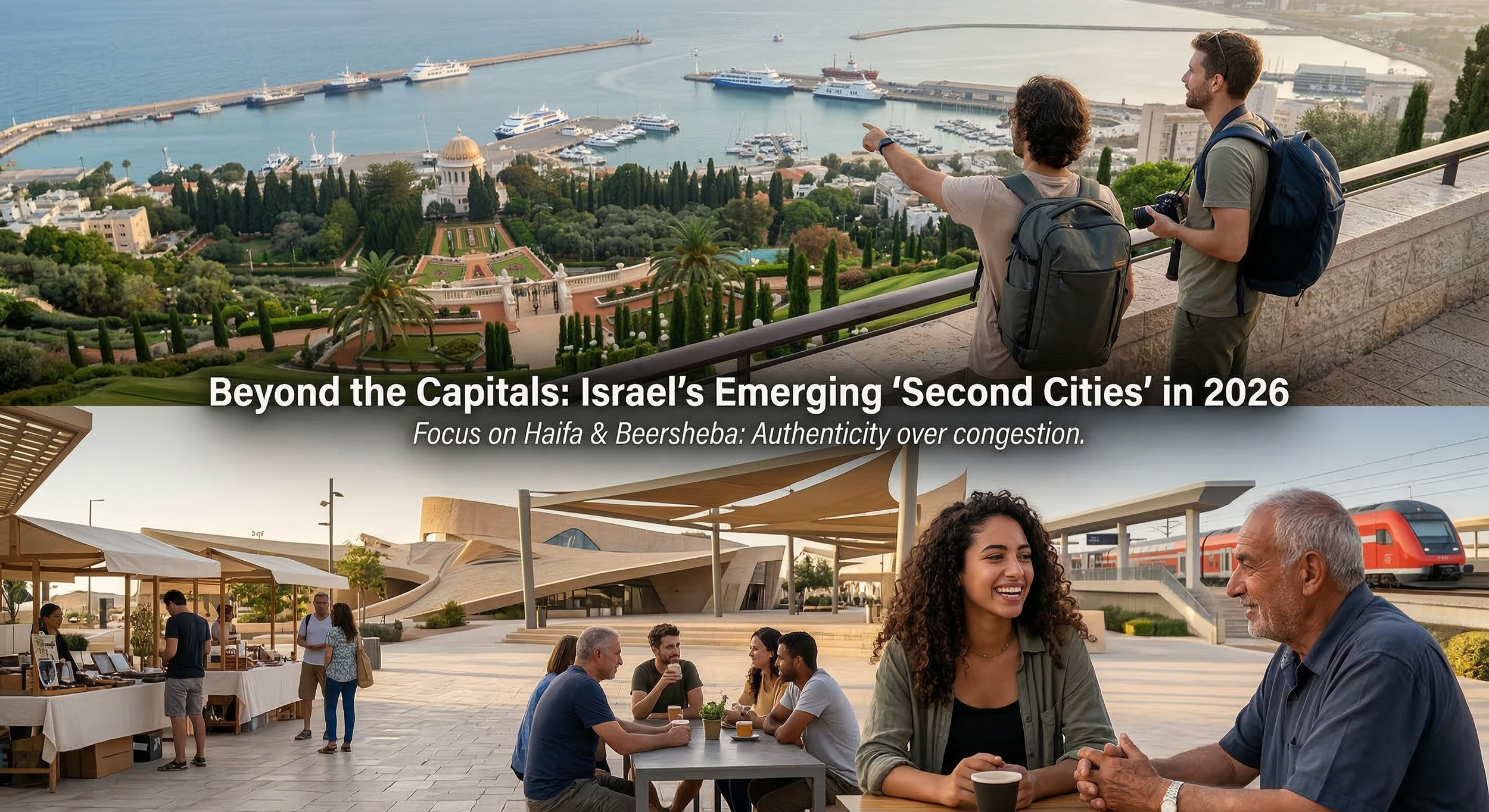
Actionable Suggestions: Exploring Haifa and Beersheba
1. The Bahá'í Gardens (Haifa)
As the city’s crown jewel, these gardens comprise 19 terraces of impeccably groomed flora cascading down Mount Carmel. The gardens are a spiritual center and a UNESCO World Heritage site, offering quiet reflection amidst the urban bustle.
Pro Tip: Join the 12:00 PM English guided tour to gain access to sections of the gardens closed to individual visitors.
Essential Info: Open daily from 9:00 AM to 5:00 PM. Modest dress is strictly required (shoulders and knees covered).
2. Louis Promenade (Haifa)
Known as the "Balcony of the Country," this scenic walkway stretches along the crest of Mount Carmel. It provides an unobstructed panoramic view of Haifa Bay, the city of Akko, and the mountains of the Western Galilee.
Ideal Time to Visit: Arrive shortly before sunset to see the city lights begin to glitter against the Mediterranean.
Essential Info: Located on Yefe Nof Street. Open 24/7; admission is free.
3. Stella Maris Carmelite Monastery (Haifa)
Perched at the tip of Mount Carmel, this 19th-century monastery features a stunning church with a ceiling decorated with vivid biblical scenes. It is traditionally associated with the Prophet Elijah.
Recommended Activity: Take the iconic glass cable car from Bat Galim beach up to the monastery for a dramatic aerial perspective of the coastline.
Essential Info: The church is open daily from 8:30 AM to 12:00 PM and 3:00 PM to 6:00 PM.
4. Madatech: National Museum of Science (Haifa)
Housed in the historic original Technion building, this is Israel's premier science and technology museum. It offers hundreds of interactive exhibits that appeal to both curious adults and families.
Recommended Experience: Visit the Cinematrix for a multi-sensory 3D film experience that brings scientific concepts to life.
Essential Info: Located in the Hadar neighborhood. Open Sunday–Thursday 9:00 AM to 4:00 PM (open later on weekends).
5. Tel Beersheba National Park (Beersheba)
A UNESCO World Heritage site, this archaeological park reveals the remains of a fortified biblical-era city. It is famous for its sophisticated ancient water system and the reconstructed "four-horned altar."
Pro Tip: Descend into the deep ancient reservoir to witness the engineering marvels of the Iron Age.
Essential Info: Located 5km east of the modern city. Open daily from 8:00 AM to 5:00 PM (cloisng at 4:00 PM on Fridays).
6. Abraham’s Well International Visitor Center (Beersheba)
This immersive museum is built around an ancient well traditionally identified as the one dug by the patriarch Abraham. It uses high-tech 3D presentations to bridge the gap between biblical narrative and modern history.
Recommended Experience: Book the audiovisual tour in advance to ensure a spot in your preferred language.
Essential Info: Located at the southern entrance to the Old City. Open Sunday–Thursday from 9:00 AM to 5:00 PM.
7. Turkish Railway Station (Beersheba)
Once a vital link in the Ottoman rail network, this restored station now serves as a heritage site and cultural venue. It houses original steam engines and host's a variety of creative pop-up events.
Recommended Activity: Visit on a Thursday evening to experience the food truck market and local artisan stalls.
Essential Info: Located on Tuviyahu Street. The heritage compound is free to enter and open during daylight hours.
8. The Negev Museum of Art (Beersheba)
Set within the historic Governor's Mansion from the Ottoman era, this museum showcases contemporary Israeli art alongside rotating international exhibitions. The architecture itself—a blend of limestone and local desert aesthetics—is a highlight.
Pro Tip: Check for evening courtyard concerts during the spring months; the acoustics against the old stone walls are exceptional.
Essential Info: Located at 60 Ha'Atzmaut St. Open Monday, Wednesday, Thursday 10:00 AM – 4:00 PM; Tuesday 10:00 AM – 7:00 PM.
Quick Tips: Dos and Don'ts for Your Visit
Do use the "Rav-Kav" smart card or mobile apps for seamless travel on the Metronit in Haifa and the national rail link to Beersheba.
Do explore the Wadi Nisnas neighborhood in Haifa for authentic street food; the falafel stands here are legendary.
Don't forget to wear sturdy walking shoes; Haifa’s steep inclines and Beersheba’s archaeological sites require comfortable footwear.
Don't assume everything is closed on Shabbat; while public transport is limited, many restaurants and cultural sites in Haifa’s German Colony remain open.
Do plan your Beersheba visit to coincide with a Thursday, so you can experience the historic Bedouin Market, which has operated for over a century.
Please note that the information and suggestions provided in this guide are based on current data and are intended for planning purposes only. Our team does not assume responsibility for changes in opening hours, site availability, or individual travel experiences. We strongly encourage all travelers to conduct their own up-to-date research and verify specific details directly with local venues or official tourism authorities before finalizing any travel plans.
No ads, no commercials, just high-quality content.
If you find our work valuable, we would be grateful for your support. Your contribution helps us continue our mission of providing high-quality content and sharing it with an even wider audience. Support Our Mission