How to Find a Bomb Shelter in Israel
Navigating civil defense structures while traveling can feel overwhelming, but understanding the system provides immense reassurance and practical confidence. Israel features one of the most advanced, highly engineered civil defense infrastructures in the world. For independent travelers, expats, and business professionals, understanding how these systems operate ensures a safe, structured, and predictable stay.
This guide outlines the structural safety protocols, vocabulary, and practical realities of urban safety systems. Knowing what to look for before booking accommodation removes the guesswork from trip planning. By focusing purely on structural engineering and public safety regulations, this resource offers a calm, clear blueprint for navigating the local environment effectively.
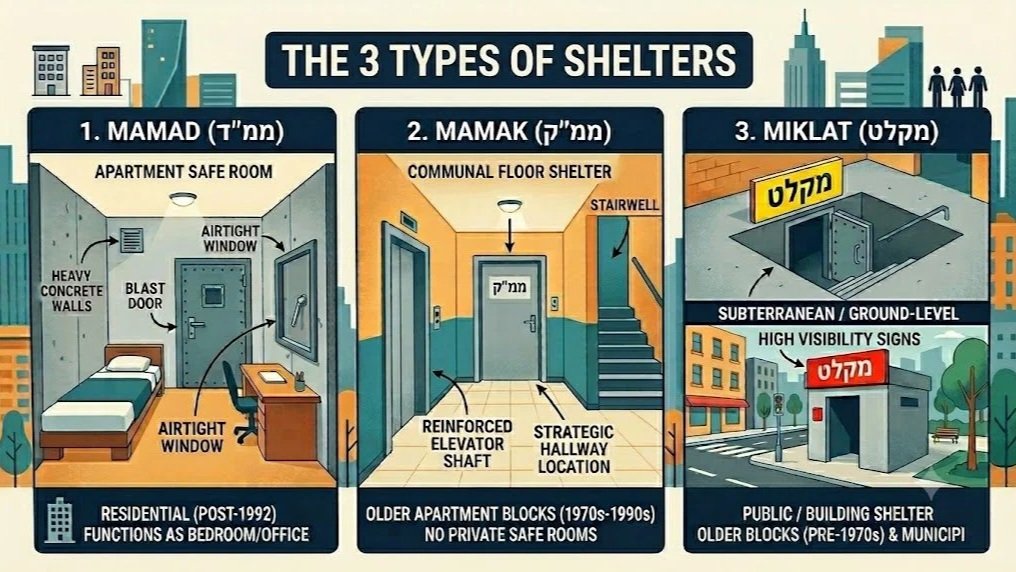
The 3 Types of Shelters: Definitions and Visuals
When walking through any local municipality, specific Hebrew terms and acronyms dictate civil defense signage. Recognizing these terms allows visitors to locate reinforced structural zones instantly within apartment complexes, hotels, or public venues.
Mamad (ממ"ד - Merkhav Mugan Dirati)
A Mamad is an individual apartment safe room designed to protect occupants from blast impacts and debris. By civil defense law, every residential apartment built after 1992 must incorporate one of these units. Structurally, it features heavily reinforced concrete walls, a high-grade blast-resistant steel door, and an airtight steel window cover. During normal periods, a Mamad functions seamlessly as a standard bedroom, guest space, or home office, but it is easily identifiable by its distinctly heavy metal hardware and specialized window levers.
Mamak (ממ"ק - Merkhav Mugan Komati)
A Mamak functions as a communal floor shelter rather than a private room within an individual unit. These structures are common in larger apartment blocks, commercial properties, or older hotels constructed between the 1970s and early 1990s, where individual apartments do not possess private safe rooms. A Mamak is strategically positioned in the central hallway of every single floor, typically engineered directly adjacent to the reinforced elevator shaft or the main structural stairwell.
Miklat (מקלט - Public / Building Shelter)
A Miklat is a dedicated subterranean or ground-level bomb shelter designed for larger communal groups or public gatherings. These structures are found in the basements or courtyards of older apartment blocks built before the 1970s, as well as standalone municipal facilities on city streets, public parks, and beach promenades. They are easily identifiable by bright, high-visibility yellow or red signs displaying the word "מקלט" or the translation "Public Shelter."
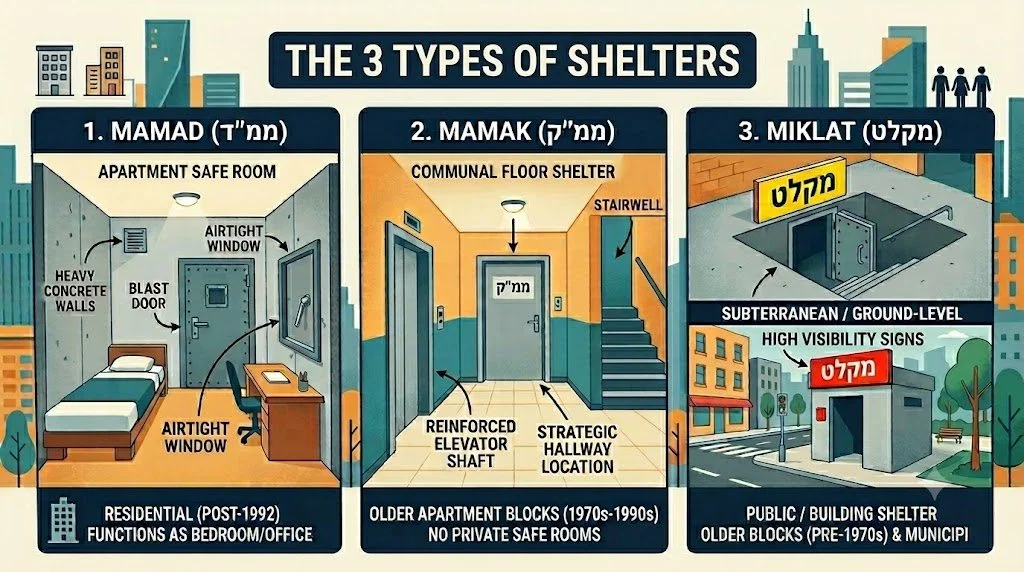
Mamad, Mamak, Miklat in Israel
Public Accessibility: Are They Open to Tourists?
A common point of confusion for international arrivals involves accessibility during an alert. Travelers frequently worry about being locked out of secure structural zones. Fortunately, local regulations and social expectations ensure complete access for everyone.
Public Street Shelters (Municipal Miklat): These facilities are entirely open to the general public. During periods of heightened regional tension, local municipalities ensure all public shelters are permanently unlocked. Furthermore, a significant portion of modern municipal shelters are retrofitted with automated, remote electronic locks. These doors pop open digitally the exact second an air siren activates in that specific municipal zone.
Building Shelters and Lobbies: If an alert occurs while walking down an urban street, standard protocol and local social expectations dictate moving into the nearest available concrete building structure. Residential building entry doors are deliberately left unlocked during these events, and local residents regularly guide passersby inside to secure internal stairwells or shared basement shelters. The civic culture prioritizes collective safety above all else.
Step-by-Step Emergency Protocol
Following a structured, calm sequence ensures optimal safety during an emergency alert. The entire civil defense system is optimized around predictable, rapid structural engineering guidelines.
1.Locate Your Immediate Protective Space:Within 0–90 Seconds.
Assess your physical location immediately. If inside a modern structure, enter the apartment Mamad or the floor Mamak. If inside an older building without a safe room, move directly into the internal concrete stairwell, ensuring you are at least two floors below the roof line. If outdoors, walk calmly into the closest public street shelter or enter the nearest open concrete building lobby.
2.Secure the Structural Openings:Immediate Action on Arrival.
Once inside the designated protective space, pull the heavy steel blast door completely closed and rotate the handle firmly into the designated locked position. Slide or pull down the heavy outer steel window shutter until it forms an airtight seal against the reinforced frame.
3.Wait for the All-Clear:Duration: 10 Minutes.
Sit directly on the floor below the window line to maximize structural protection. Remain completely inside the reinforced space for a full 10 minutes after the audible siren stops sounding. This strict duration is mandatory to ensure that any interception debris or metallic shrapnel has completely fallen to the ground outside.
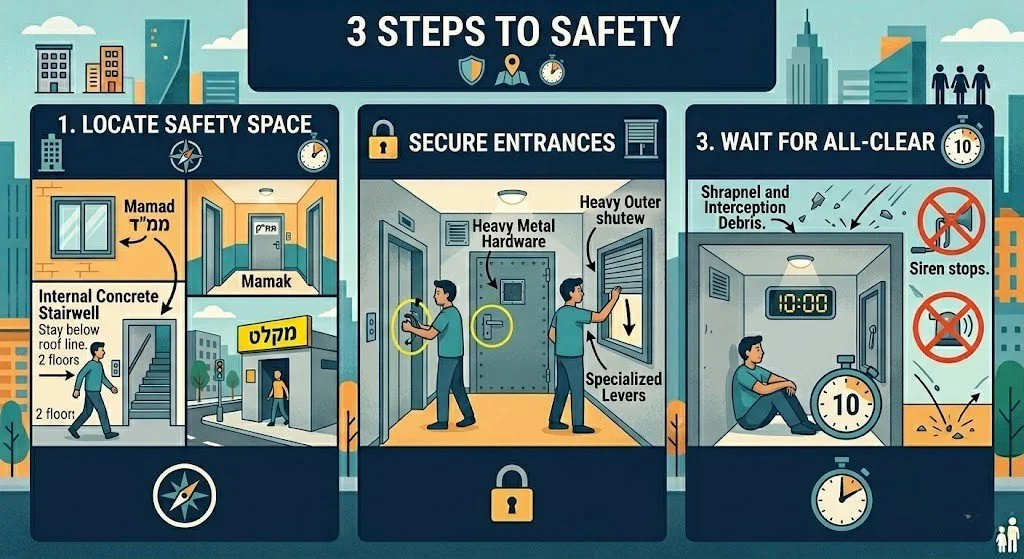
3 Steps To Safety
Practical Insider Tips for Booking Accommodation
When selecting short-term rentals or hotels, verifying structural safety specifications before arrival ensures peace of mind. Use this practical engineering checklist to guide your booking choices.
The Short-Term Rental Checklist
Before finalizing a booking on platforms like Airbnb, explicitly message the property host to clarify the layout. Useful inquiries include:
"Does this specific rental unit feature a private Mamad safe room inside the apartment layout?"
"Is there a shared Mamak shelter located on the same floor, or a Miklat in the basement?"
"If the building relies on a shared communal shelter, which floor is it located on, and is it accessible via the main stairwell?"
Navigating Historic Neighborhoods
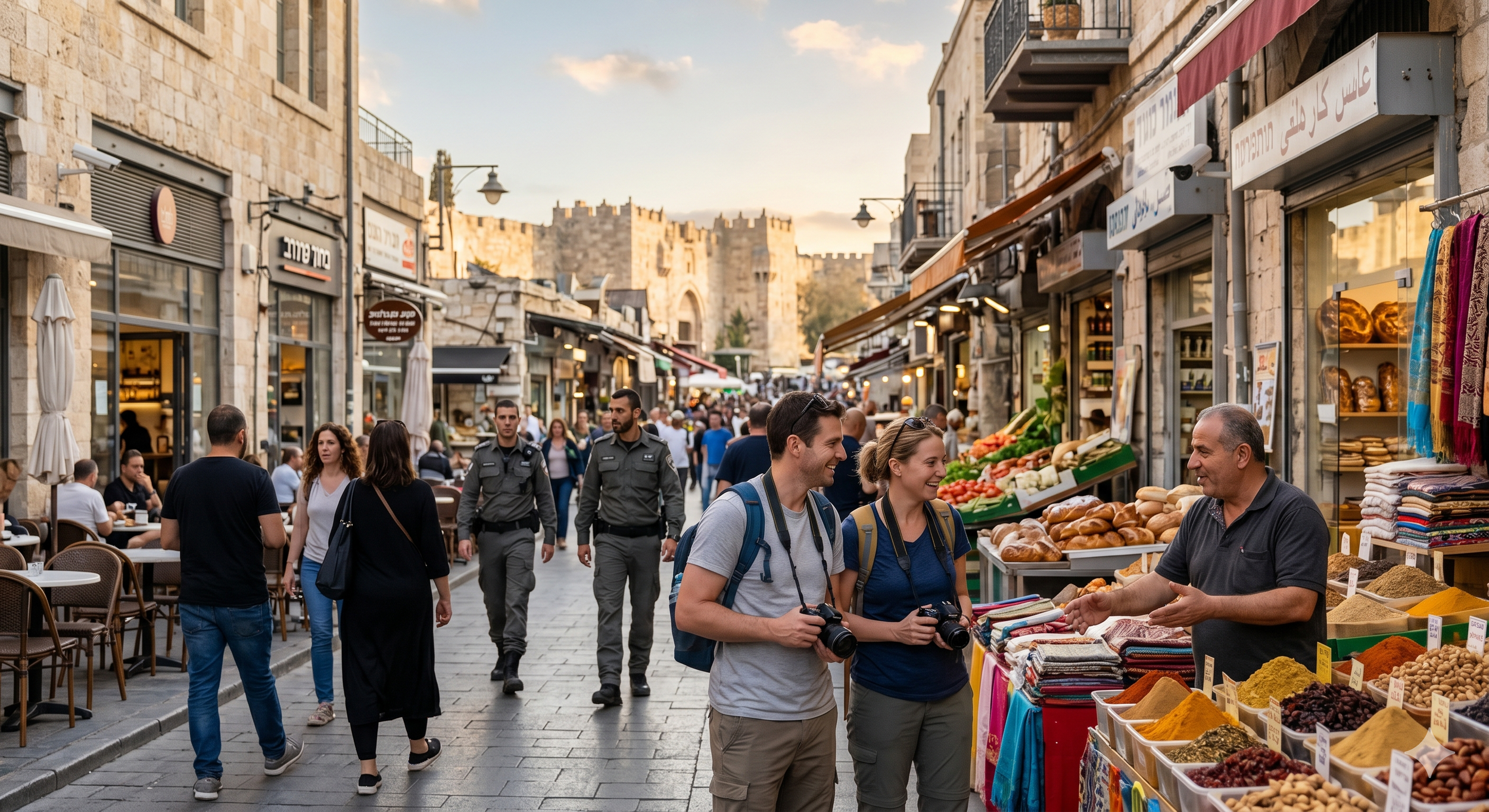
Historic urban zones—such as the stone alleyways of Nachlaot in Jerusalem or the narrow lanes of the Yemenite Quarter in Tel Aviv—feature traditional stone masonry that predates modern reinforced concrete safety mandates. If booking properties in these historic quarters, identify the exact location of the closest municipal public shelter on your very first day.
The Stairwell Rule
If a rental apartment lacks an internal safe room and a public municipal shelter is located too far away to reach within the local time window, prioritize the internal concrete stairwell. Heavy concrete stairwells function as the reinforced structural "spine" of multi-story buildings, absorbing lateral forces far more effectively than standard external walls.
How to Find "Bomb Shelters Near Me" in Real Time
Because response windows vary dramatically depending on your specific region, having an immediate, actionable strategy to locate protected spaces in real time is a critical component of travel safety. Utilizing a blend of digital resources, mobile applications, and physical signage ensures you are never caught unprepared when an alert sounds.
1. Leverage Major Digital Mapping Platforms
The standard navigation tools already installed on your mobile devices are highly effective for rapid positioning. Typing explicit search terms into Google Maps or Apple Maps, such as "מקלט בתל אביב" (Miklat Tel Aviv) or simply "bomb shelters near me," generates live, geographically sorted lists of public municipal spaces relative to your position. For travelers mapping out their day, pinning these locations relative to your exact accommodation address or daily tour itinerary creates a reliable safety layout.
2. Download the Official Home Front Command App (Pikud Ha'Oref)
This mobile application is the definitive, government-backed resource for real-time alerts and safety routing across the country. Available for both iOS and Android platforms, the application functions via highly precise GPS tracking to deliver location-specific warnings long before audible sirens might be heard indoors. Key system integrations include instantaneous missile alert notifications tailored strictly to your immediate square kilometer, integrated shelter locator maps, and multilingual safety instructions that update dynamically based on current emergency status.
3. Utilize the Safeway Application
An increasingly popular digital alternative that has emerged during recent security escalations is Safeway. This specialized, streamlined GPS application focuses exclusively on minimizing the time required to find the closest public shelter. The tool is highly recommended for short-term vacationers, international business professionals, and expats who are entirely unfamiliar with the Hebrew street names or complex urban layouts of their surroundings.
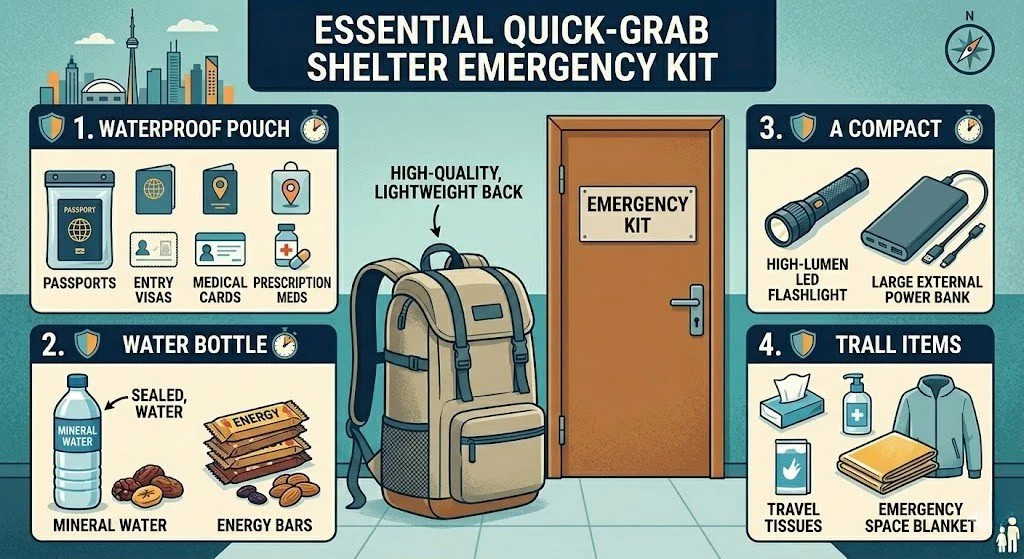
Emergency Kit
Two Surprising Facts About Israeli Civil Defense
The engineering underlying the domestic safety infrastructure relies on unique architecture and materials designed to withstand immense dynamic pressures. The structural thickness of a standard apartment Mamad requires specialized high-density concrete poured in a single, continuous casting phase rather than sequential brickwork blocks. This creates a monolithic, seamless protective shell that prevents shearing forces from detaching individual walls during high-impact vibrations.
Additionally, the heavy steel doors are explicitly engineered with dual-mode hinges, allowing them to remain completely airtight against gas or blast pressures while still permitting emergency rescue teams to pry them open from the exterior using standard hydraulic equipment if the internal locking mechanism warps under heat.
Public municipal shelters across major urban hubs double as vital neighborhood cultural spaces during extended periods of regional quiet. Rather than remaining dark, subterranean concrete voids, local municipalities routinely convert public shelters into community art galleries, underground music rehearsal spaces, fully operational martial arts dojos, and youth clubhouses.
This dual-use urban planning strategy ensures that the facilities undergo constant ventilation maintenance, functional plumbing checks, and regular structural lighting inspections as part of daily civic life. Consequently, when an emergency arises, the public enters a clean, familiar, and fully maintained community asset rather than an abandoned utility vault.
Dos and Don'ts for Your Visit
Dos
Do download official civil defense alerting applications, such as the Home Front Command app, which uses real-time GPS location tracking to deliver immediate audio warnings tailored strictly to your specific urban square.
Do check the mobility of the steel blast door and window shutter inside your Airbnb immediately upon arrival to ensure no luggage or decorative furniture blocks the swing radius.
Do maintain a small bottle of mineral water and a portable external phone battery charger inside your safe room area for easy accessibility during evening hours.
Do follow the guidance of local residents calmly if an alert occurs while walking outside; their experiential familiarity with neighborhood structural layouts is highly reliable.
Don'ts
Don't stand near glass windows, balcony railings, or external facade walls to film overhead interceptions, as falling shrapnel and glass fragments pose the highest risk of injury during an event.
Don't attempt to utilize the main elevators during an alert sequence, as sudden power interruptions can freeze the elevator cabin between floors away from structural exit pathways.
Don't leave the designated safe zone prior to the completion of the mandatory 10-minute structural waiting window, even if you hear other pedestrians moving in the hallway outside prematurely.
Don't worry if you find yourself in an older stone neighborhood; simply rely on the structural stairwell rule or move calmly into a nearby concrete shop lobby.
Disclaimer: This guide is for informational travel purposes only and does not constitute official security or civil defense counsel. Readers must independently research current local guidelines and monitor real-time security directives provided by authorized governmental agencies during their travels.
Check Out Our Full Israel Emergency Guide for Tourists
No ads, no commercials, just high-quality content.
If you find our work valuable, we would be grateful for your support. Your contribution helps us continue our mission of providing high-quality content and sharing it with an even wider audience. Support Our Mission